
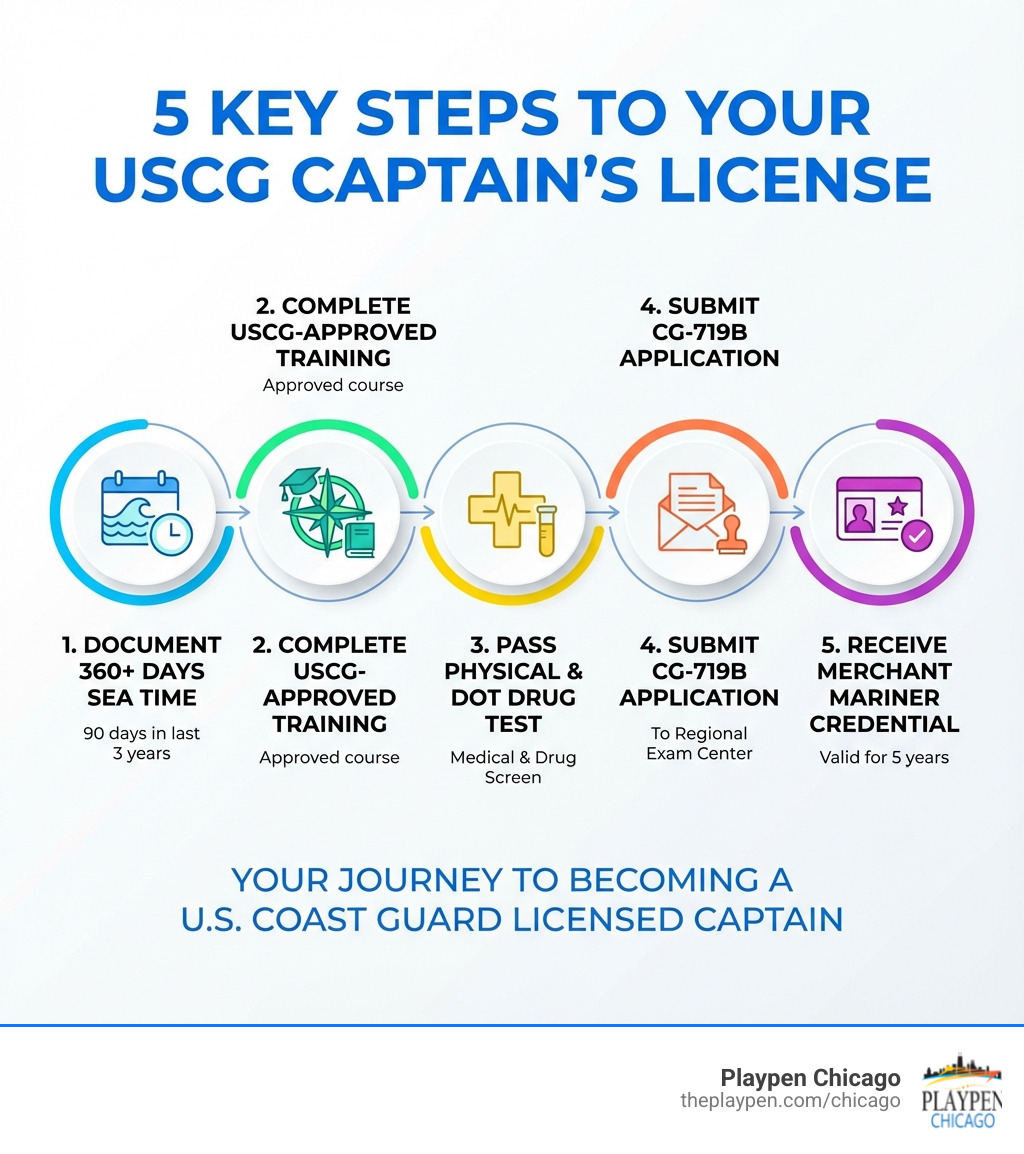
Captain licensing & uscg license types: 5 Key Steps
Introduction: Your First Step to a Chicago Charter Career
Captain licensing & uscg license types are required if you want to legally carry passengers for hire on the water. Whether you’re operating a charter fishing boat, running a private yacht excursion, or providing sightseeing tours on Lake Michigan, the U.S. Coast Guard mandates that you hold the proper credentials before you take paying passengers aboard.
Quick Answer: Types of USCG Captain’s Licenses
- OUPV (Six-Pack) License: Allows you to carry up to 6 paying passengers on uninspected vessels up to 100 gross tons
- Master License: Required for carrying 7 or more passengers on inspected vessels; issued in 25, 50, or 100 gross ton increments
- Route Endorsements: Inland, Great Lakes, or Near Coastal (up to 100 or 200 miles offshore)
- Additional Endorsements: Sailing and towing endorsements for specialized operations
The license is only necessary if you get paid to operate an auxiliary powered boat in waters patrolled by the United States Coast Guard. This includes any form of compensation—whether cash, trade, or other favors. The USCG takes this seriously because carrying passengers for hire comes with significant professional responsibility and safety obligations.
For those looking to turn their passion for boating into a career on Chicago’s vibrant waterfront, understanding these license types is your first step. The process involves documenting sea time, passing exams, meeting health requirements, and proving your readiness to ensure passenger safety on the water.
OUPV vs. Master: Choosing the Right USCG License
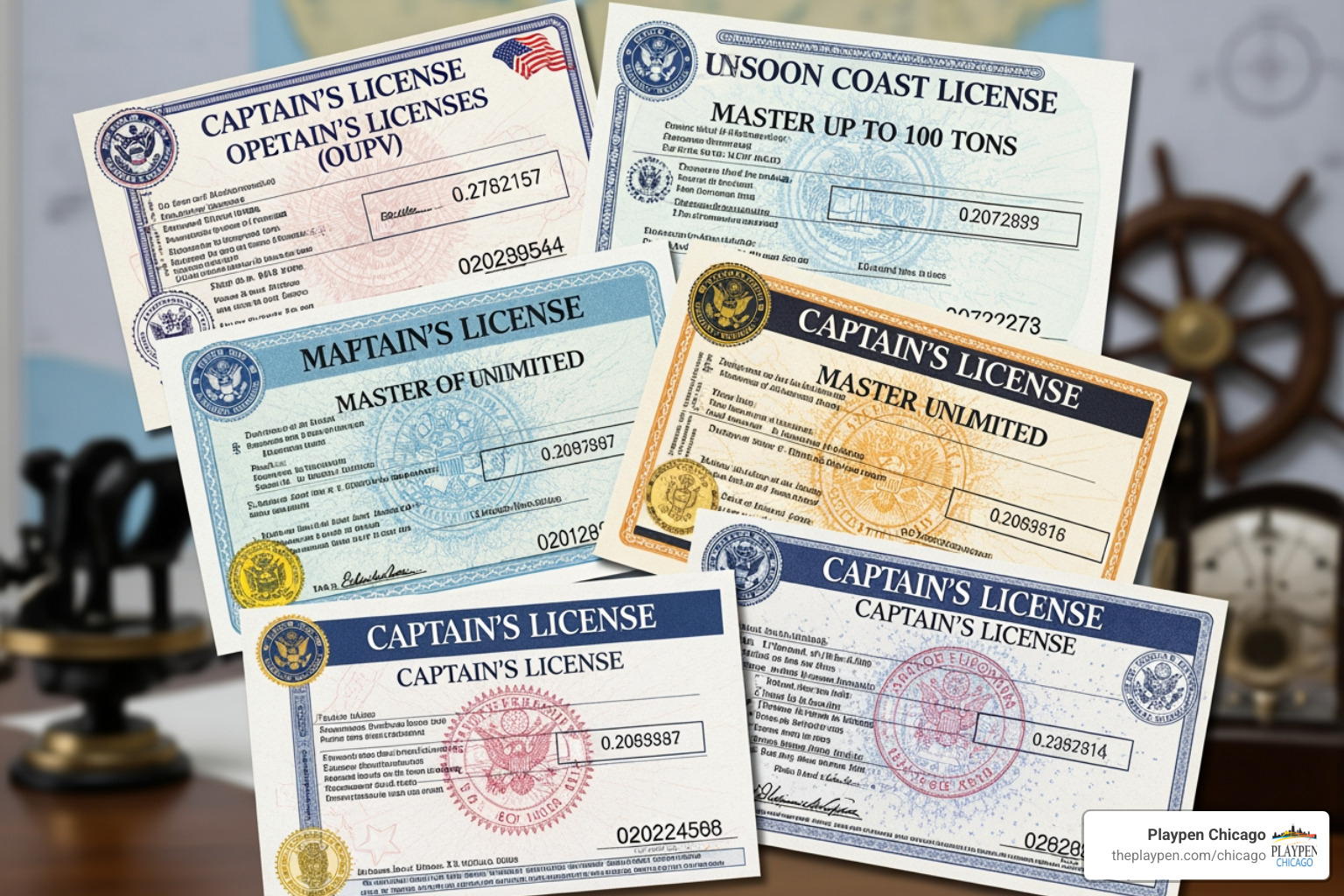
Navigating captain licensing & uscg license types can feel a bit like charting an unfamiliar course. But don’t worry, we’re here to help you understand the two primary types of USCG captain’s licenses: the Operator of Uninspected Passenger Vessels (OUPV), commonly known as the “Six-Pack” license, and the Master License. Choosing the right one depends on your career aspirations, the type of vessel you plan to operate, and how many passengers you intend to carry.
OUPV “Six-Pack” License Explained
The OUPV license is often the starting point for many aspiring captains, especially those looking to lead smaller, private charters on Lake Michigan. This license allows us to operate uninspected vessels of up to 100 gross tons. The crucial limitation here is the “six-pack” part: we can carry a maximum of six paying passengers plus our crew. This makes it ideal for charter fishing, small sightseeing tours, diving excursions, or even boat deliveries. OUPV licenses are issued with a particular route, which we’ll dive into later, such as Inland, Great Lakes, or Near Coastal.
Master License Explained
If your dreams involve larger vessels, more passengers, or inspected commercial operations on Lake Michigan, a Master License is likely your destination. This is the highest level of captain’s license issued by the USCG. With a Master license, we can operate both uninspected vessels (like with the OUPV) and inspected vessels. The key difference is that on an inspected vessel, we can carry seven or more passengers, with the exact number determined by the vessel’s Certificate of Inspection (COI). This license is essential for operations like dinner cruises, water taxis, ferries, or larger party boats that are subject to rigid USCG Commercial Vessel Inspection standards. Master licenses are issued in increments of 25, 50, or 100 gross tons, reflecting our experience on vessels of various sizes.
Uninspected vs. Inspected Vessels
This distinction is fundamental to captain licensing & uscg license types. An uninspected vessel is generally a smaller boat that carries six or fewer passengers for hire. It doesn’t undergo the same rigorous inspections by the USCG as an inspected vessel. Conversely, an inspected vessel is designed or certified to carry more than six passengers for hire and must meet strict safety and construction standards set by the USCG. The type of license you hold dictates whether you can command an inspected or uninspected vessel with paying passengers.
Gross Tonnage (GT) Limits
Both OUPV and Master licenses specify a gross tonnage (GT) limit, typically up to 100 GT for these entry-level commercial credentials. Gross tonnage is a measure of a vessel’s internal volume, not its weight, and helps categorize vessels for regulatory purposes. Our experience on vessels of different tonnages will influence the GT limit on our Master license.
Here’s a quick comparison of the two main types of licenses:
| Attribute | OUPV (6-Pack) License | Master License Master of Vessels on Not More Than 100 Gross Registered Tons, License Renewal, Further Information
Core Requirements for Your Captain’s License
Before we set sail on Lake Michigan as licensed captains, we need to ensure we meet the fundamental eligibility criteria set by the USCG. These requirements cover age, citizenship, physical fitness, and drug testing—all designed to ensure we are responsible and capable mariners.
General Eligibility Overview
To even begin the journey of obtaining your captain licensing & uscg license types, you must satisfy several basic requirements. These are in place to uphold safety standards for both us and our passengers, especially in commercial operations.
Age Requirements
Our age plays a role in the type of license we can pursue:
- For an OUPV (Six-Pack) license, we must be at least 18 years old.
- For a Master license, we must be at least 19 years old.
Citizenship and Residency Rules
The rules vary slightly depending on the license:
- For an OUPV license, we can be a U.S. citizen or a lawful permanent resident. If we are a permanent resident, we’ll need to provide a copy of our green card and Social Security number. If we are not U.S. citizens, an OUPV license might be limited to undocumented vessels of less than 5 net tons (around 26ft). However, operating a documented vessel for hire over 5 net tons requires U.S. citizenship.
- For a Master license, we must be a U.S. citizen.
Physical Examination Standards
We need to be in good health to command a vessel. This means passing a physical examination. This exam must be taken within 12 months of applying for our license. We’ll need to meet certain standards, including having vision of at least 20/40 with corrective lenses. It’s always best to disclose any health conditions upfront; hiding them can lead to greater issues down the line.
DOT Drug Testing Requirements
Safety on the water includes ensuring we are drug-free. We are required to pass a DOT-compliant drug test. This test must be completed within six months of applying for our license, or we must be enrolled in a USCG-approved drug testing consortium. It’s crucial to remember that marijuana use, even if legal in Illinois, is still federally prohibited for licensed captains and will disqualify an applicant.
How Sea Time is Documented and What Counts
Sea time is the backbone of our application for captain licensing & uscg license types. It’s how we prove our practical experience on the water. Properly documenting this time is critical, as the USCG scrutinizes every entry.
Sea Service Definition
Sea service refers to the time we’ve spent underway on a vessel. It’s not just sitting at the dock; the boat needs to be actively navigating. This experience can be on our own boat or someone else’s, as long as it’s properly documented.
4-Hour vs. 8-Hour Day Rule
The USCG has specific rules for what constitutes a “day” of sea service:
- For vessels less than 100 gross tons (the typical size for OUPV and most Master 100 GT licenses), at least four hours underway in a 24-hour period counts as one day.
- For vessels 100 gross tons or more, at least eight hours underway in a 24-hour period counts as one day.
Documenting Time on the CG-719S Form
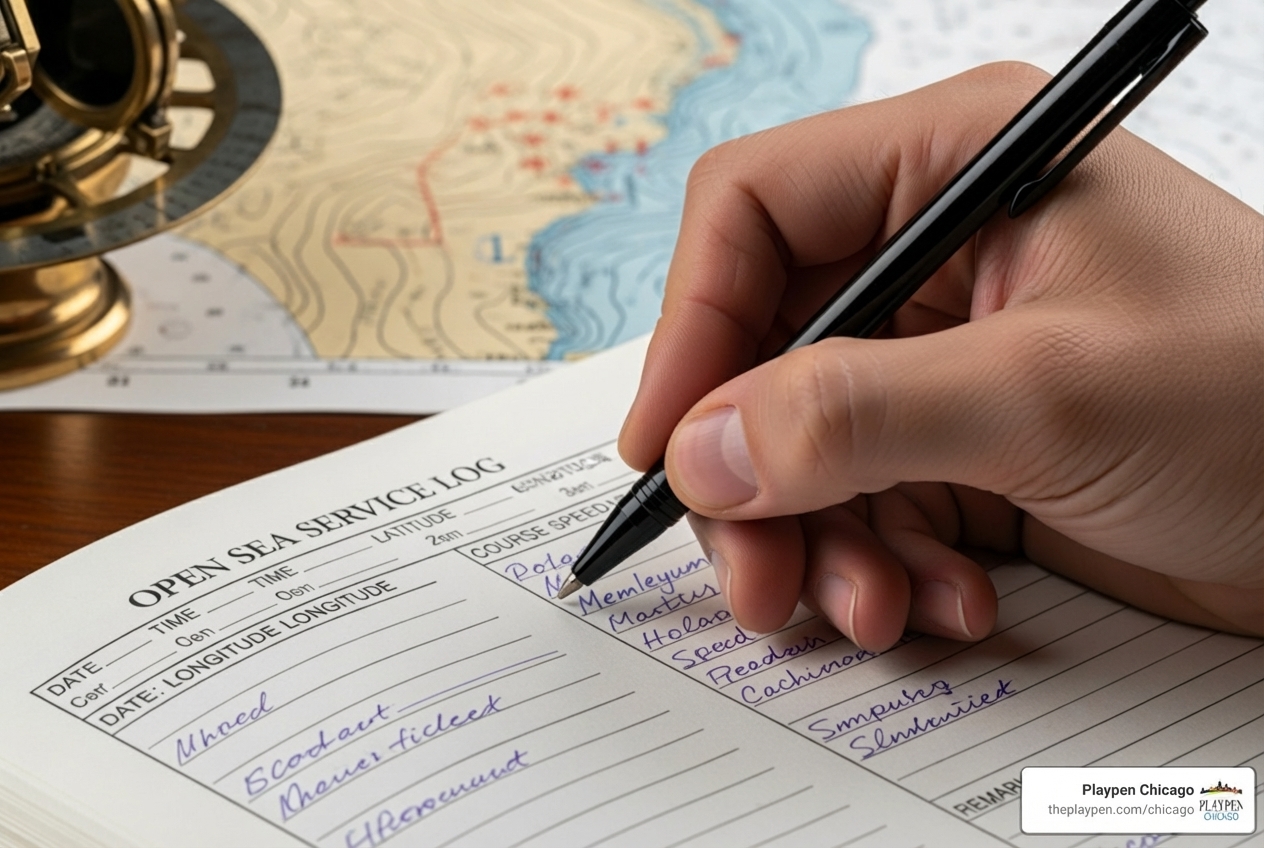
Our sea time must be carefully documented on the Small Vessel Sea Service Form (CG-719S) or in a detailed letter. Each entry needs to be signed off by the owner, operator, or master of the vessel. If we are the owner, we’ll need to provide proof of ownership for the vessel(s) listed. It’s often recommended to use a separate form for each vessel we’ve served on to keep things clear. The USCG strongly advises applicants to log sea time early and often, rather than trying to recall years of experience at the last minute.
For comprehensive details on what exactly counts, we can refer to the official USCG guidance: What Counts as Sea Service.
Specific Sea Time for OUPV and Master: A Key Part of USCG License Types
The amount and type of sea time we’ve accrued directly impact which license we can obtain and its endorsements.
OUPV Sea Time
To qualify for an OUPV (Six-Pack) license, we need to show 360 days of experience on Inland or Near Coastal waters. Of these 360 days, a crucial “recency” clause dictates that at least 90 days must have occurred within the last three years. This ensures our experience is current and relevant.
Master Inland/Great Lakes Sea Time
For a Master Inland or Great Lakes license (up to 100 Gross Tons), the total sea time requirement is also 360 days, with 90 days in the last three years. If we specifically want a Great Lakes routing on our license, 90 of those days must have been on Great Lakes waters. This is particularly relevant for those of us operating on Lake Michigan.
Master Near Coastal Sea Time
A Master Near Coastal license demands more extensive experience. We’ll need a total of 720 days of sea service. Of these, at least 360 days must have been on Near Coastal or Ocean waters. Similar to other licenses, 90 days must be within the last three years to satisfy the recency requirement. It’s worth noting that any sea time accumulated for an OUPV license can typically be credited towards a Master license, so our experience builds up!
Understanding Captain Licensing & USCG License Types for Different Waters
The waters we intend to operate on directly influence the route endorsement on our license. For Chicago-based captains, this primarily means understanding Inland, Great Lakes, and Near Coastal routes on Lake Michigan.
Route Endorsements Explained
A route endorsement specifies the geographical area where we are authorized to operate our vessel. It’s like having a specific navigation chart printed on our license. These endorsements are critical for ensuring we have the appropriate experience and knowledge for the specific waterways.
Inland Waters (Rivers, Bays)
Inland waters generally refer to bays, sounds, rivers, and lakes within the U.S., within what the USCG defines as “dedicated boundary lines.” For us in Chicago, this would include parts of the Chicago River and other protected areas, though most of our focus is on the vastness of Lake Michigan. An Inland route endorsement limits our operations to these protected waters.
Great Lakes (Specific to Chicago)
Given our prime location, the Great Lakes endorsement is highly relevant. This endorsement allows us to operate on the Great Lakes, including our beloved Lake Michigan. For an OUPV license, obtaining a Great Lakes routing requires at least 90 days of our 360 total sea days to have been on Great Lakes waters. This ensures we are familiar with the unique characteristics and challenges of these large freshwater seas.
Near Coastal (Up to 100/200 Miles Offshore)
The Near Coastal endorsement expands our operating area beyond inland and Great Lakes waters. For an OUPV license, a Near Coastal routing allows us to operate up to 100 miles offshore. To achieve this, 90 days of our 360 total sea days must be on Near Coastal waters. For a Master Near Coastal license, this limit extends up to 200 miles offshore, reflecting the increased experience required. A Master Near Coastal license requires 720 total days of experience, with at least 360 of those days specifically on Near Coastal or Ocean waters. OUPV endorsements are not valid for International voyages.
Additional Endorsements for Specialized Operations
Beyond the primary license types and routes, we can further specialize our credentials with additional endorsements. These can open up new opportunities and improve our career prospects on Lake Michigan and beyond.
Sailing Endorsement Requirements
If our passion lies with the wind and sails, a sailing endorsement is a must. This allows us to operate inspected sailing vessels. The sea time requirements for this endorsement vary by the level of our Master license:
- For a Master Inland/Great Lakes license, we’ll need a minimum of 180 days on sailing vessels.
- For a Master Near Coastal license, this increases to a minimum of 360 days on sailing vessels.
Towing Endorsement for Commercial Assistance
A towing endorsement is invaluable for captains offering commercial assistance. This allows us to legally engage in commercial towing operations, such as assisting disabled vessels for hire. It’s a common and practical addition for many charter captains.
Why Endorsements Expand Your Career Options
Adding endorsements to our license significantly broadens our potential career paths. A sailing endorsement, for instance, opens doors to operating sailing charters or instructing on larger sailboats on Lake Michigan. A towing endorsement makes us more versatile for marine assistance. These specializations not only make us more marketable but also demonstrate a higher level of skill and commitment to our craft.
The Application Process, Costs, and Renewal
Obtaining our captain’s license is a multi-step journey involving training, documentation, and formal application. Understanding each phase, from gathering our paperwork to renewing our credentials, is key to a smooth process.
First, let’s look at the essential components of our application packet:
- Completed Application Form (CG-719B): This is the primary application for our Merchant Mariner Credential (MMC).
- Proof of Sea Service (CG-719S or detailed letters): As discussed, this documents our time on the water.
- Medical Certificate: Proof of our physical examination.
- Drug Test Results: Documentation of a passed DOT-compliant drug test.
- CPR and First Aid Certification: Current certification from an approved provider.
- Transportation Worker Identification Credential (TWIC): Required for background checks.
- Proof of Citizenship/Residency: Such as a U.S. passport, birth certificate, or green card.
- Application Fees: Payment for the USCG’s processing and issuance.
- Certificate of Completion from an Approved Training Course: If we choose to take a course rather than test directly with the USCG.
Finding USCG-Approved Training Courses
While it’s possible to self-study and test directly with the USCG, many aspiring captains opt for USCG-approved training courses. These courses, offered by maritime academies and schools, cover all the necessary material and often include the written exams. The USCG National Maritime Center (NMC) maintains an updated list of approved course providers. These courses can range from eight days to two and a half weeks of classroom learning and examinations.
The Role of the Transportation Worker Identification Credential (TWIC)
The TWIC card is a vital part of our application. It’s issued by the Transportation Security Administration (TSA) and involves a comprehensive background check, including fingerprinting. The TWIC serves as a federal identification credential and is mandatory for all mariners seeking a Merchant Mariner Credential (MMC). It ensures that individuals who have unescorted access to secure areas of maritime facilities and vessels pose no security risk.
CPR and First Aid Certification
As captains, we are responsible for the safety of our passengers. This includes being prepared for medical emergencies. We must hold current CPR and basic first aid certifications, typically obtained within 12 months of our application. Many training providers offer these courses, or we can find them through organizations like the American Red Cross.
The Application Process for Captain Licensing & USCG License Types
Once we’ve gathered all our documents and completed any necessary training, it’s time to submit our application to the USCG.
Step-by-Step Guide
- Complete the CG-719B Application Form: This is our official application for a Merchant Mariner Credential. It’s crucial to fill it out accurately and completely. We recommend downloading the PDF and completing it in an Adobe PDF application rather than in a web browser. A helpful video guide on how to complete the form is available via this link: CG-719B application form.
- Assemble Supporting Documents: Gather all the items listed above (sea service, medical, drug test, TWIC, CPR/First Aid, etc.). Missing information or improper signatures can significantly delay our application.
- Submit to a USCG Regional Exam Center (REC): We can submit our application to a USCG Regional Exam Center in person, by mail, or electronically. It’s important to include photo identification with our application.
- Confirm Eligibility (Optional but Recommended): Some experts suggest submitting our application to the USCG for review before enrolling in expensive courses. This can save us time and money if there are any unforeseen issues with our eligibility.
- Await Processing: The USCG will review our application. This process can take up to 90 days, so patience is a virtue!
Associated Costs and License Renewal
Obtaining a captain’s license involves several costs, but it’s an investment in our professional future.
Breakdown of Fees (Application, Issuance, Exam)
Here’s an estimated breakdown of the fees we can expect:
- USCG Application Processing Fee: Approximately $100.
- USCG License Issuance Fee: Approximately $45.
- Examination Fee (if testing directly with USCG): Around $95.
- TWIC Enrollment Fee: Approximately $125.
- Medical Exam: Varies, but can be $100-$200+.
- Drug Test: Varies, but can be $50-$100+.
- CPR/First Aid Training: Varies, but typically $50-$100+.
Typical Course Costs
If we opt for a USCG-approved training course, the costs can range from a few hundred dollars up to $1,500, depending on the school and the specific license type. So, while the direct USCG fees are manageable, the total cost, including courses and other requirements, can easily exceed $500.
License Validity (5 Years)
Once issued, our captain’s license is valid for five years. This means we’ll need to stay on top of our renewal schedule to keep our credentials active.
The Renewal Process (Physical, Drug Test, No Exam)
Good news! When it’s time to renew our license every five years, we generally won’t need to retake the written exams. The renewal process is simpler:
- Submit a Renewal Application: Fill out the necessary USCG forms.
- Pass a Physical Examination: Obtain an updated physical within 12 months of renewal.
- Pass an Approved Drug Test: Complete a drug test within six months of renewal.
It’s crucial to renew on time. The USCG offers a grace period of up to six years after our license expires. However, if we let it lapse for longer than six years, we’ll have to start the entire licensing process from scratch, including retaking all exams. We certainly don’t want to do that!
Frequently Asked Questions About Captain’s Licenses
We know you might have more questions, so let’s tackle some common concerns and clear up a few misconceptions about captain licensing & uscg license types.
What are common disqualifiers for a captain’s license?
While the USCG aims to license competent mariners, certain factors can lead to disqualification:
- Criminal History Disclosure: It’s imperative to disclose all criminal history, regardless of how minor or how long ago it occurred. The USCG will conduct thorough background checks (via the TWIC process), and failing to disclose something can be a bigger issue than the offense itself. Untreated or unstable health conditions can also be disqualifying.
- Certain Medical Conditions and Medications: Specific medical conditions or the use of certain medications might prevent us from obtaining a license if they impair our ability to safely operate a vessel. The physical exam is designed to identify these.
- Federal Rules on Drug Use: As mentioned, federal law prohibits the use of marijuana for licensed mariners, even if it’s legal in Illinois. Any positive drug test or history of illegal drug use can be a disqualifier.
What are common misconceptions about getting licensed?
Many aspiring captains harbor misconceptions that can deter them or lead them down the wrong path. Let’s set the record straight:
- Small Boat Experience Counts: A common myth is that only experience on large commercial vessels counts. Not true! We can log sea time on our own pleasure craft, even a small one. Four hours underway on a vessel under 100 GT counts as a day. So, all those hours on Lake Michigan in our recreational boat can add up!
- You Don’t Need to Be a Full-Time Mariner: While many licensed captains work full-time, it’s not a requirement to obtain a license. Many passionate boaters pursue their license to supplement their income or for part-time charter work.
- Advanced Celestial Navigation Isn’t Required for Most Licenses: For OUPV and Master licenses up to 100 or 200 Gross Tons, we generally won’t need to master celestial navigation. The focus is on coastal navigation, Rules of the Road, safety, and seamanship.
How is a Master license’s tonnage (25/50/100 GT) determined?
The gross tonnage (GT) limit on our Master license (e.g., 25, 50, or 100 GT) isn’t just pulled from thin air. It’s directly determined by our documented sea service and the size of the vessels we’ve gained experience on. The USCG evaluates the total days of sea service we have and, crucially, how many of those days were spent on vessels over specific gross tonnages (e.g., over 5 GT, over 34 GT, over 50 GT). This ensures that our license matches our proven experience and capability to command vessels of a certain size. The USCG ultimately assigns the tonnage rating based on this accumulated experience.
Conclusion: Set Sail on Your Professional Charter Journey in Chicago
Starting on the journey to obtain your captain licensing & uscg license types is a significant step towards a rewarding career on the water. We’ve covered the essential distinctions between OUPV and Master licenses, the rigorous requirements for sea time, physical fitness, and drug testing, and the critical importance of route and specialized endorsements. Understanding this intricate process is not just about meeting regulations; it’s about embracing the professional responsibility that comes with ensuring the safety and enjoyment of our passengers.
For us in Chicago, Lake Michigan offers an unparalleled backdrop for a thriving charter business. From breathtaking skyline tours to exhilarating fishing expeditions, the opportunities are as vast as the lake itself. A USCG captain’s license is your ticket to legally and confidently turn your passion for boating into a profession within this vibrant marine community.
Ready to connect with a community eager for premium on-water experiences and showcase your captain services? Playpen Chicago is the premier social networking platform and entertainment hub for Chicago’s boating and city-wide events community. We empower boat owners, charter operators, and licensed captains like us to easily list our services, promote onboard experiences, and reach a high-spend audience looking for unforgettable moments on Lake Michigan.
Don’t let the paperwork deter you. With the right preparation, dedication, and resources, you can achieve your dream of becoming a licensed captain.
Join the Playpen Chicago community and list your captain services today, and let’s set sail on your professional charter journey!