
Beginner Boating Guide Chicago: Ultimate 2025 Start
Why Chicago’s Waterways Are Your Gateway to Adventure
A beginner boating guide to Chicago starts with understanding that this city offers one of the most unique and accessible boating experiences in America. Lake Michigan’s vast waters meet the iconic Chicago River, creating a waterfront playground unlike any other.
Quick Start for First-Time Chicago Boaters:
- Get Certified – If you were born on or after January 1, 1998, you need a valid Illinois boating safety certificate.
- Know the Rules – Children 13 and under must wear life jackets at all times; the blood alcohol limit is 0.08%.
- Choose Your Launch – Chicago has three main public boat ramps: 31st Street Harbor, Burnham Harbor, and Diversey Harbor.
- Time It Right – The official harbor season runs from May 1 through October 31, with peak conditions from June through August.
- Master the Lock – The Chicago Harbor Lock connects the river to the lake and operates 24/7/365.
If you’re reading this, you’re probably dreaming of the open water and the endless adventures awaiting you on one of the world’s largest freshwater lakes. Chicago’s lakefront hosts 10 harbors operated by the Chicago Park District—the nation’s largest municipal harbor system—with spaces for 6,000 boats. The Chicago Harbor Lock is the busiest in the United States.
But boating on Lake Michigan is vastly different from inland boating. The water remains chilly, the weather can change rapidly, and you’re navigating alongside everything from tour boats to commercial barges. The challenges are real, but so are the rewards: incredible skyline views, the famous Playpen social scene, and a front-row seat to Navy Pier’s fireworks. This guide will walk you through everything you need to know to get started safely and confidently.
Gearing Up: Essential Prep for Chicago Boating
Before you cast off, a little preparation goes a long way. This section covers everything a beginner needs to know before heading to the harbor, from legal requirements to essential gear.
Understanding Illinois Boating Regulations: A Beginner Boating Guide Chicago
Boating on Lake Michigan means you’re playing by Illinois rules. Just like driving a car, there are specific regulations designed to keep everyone safe. Getting familiar with these is a crucial step in our beginner boating guide to Chicago.
First, the boating safety certificate. If you were born on or after January 1, 1998, you must complete an approved boating safety course and get a valid safety certificate to operate a motorized vessel. It’s a good idea for all new boaters, regardless of age, to take a safety course to learn essential navigation and safety procedures.
Next, boat registration. With few exceptions, all boats operating in Illinois waters must be registered and have a certificate of title.
When it comes to Personal Flotation Devices (PFDs), or life jackets, the rules are clear. Every boat must have a U.S. Coast Guard-approved PFD for each person on board. Children 13 years or younger are required to wear their PFD at all times on the water. It’s wise to have extra PFDs for guests.
Finally, let’s talk about Boating Under the Influence (BUI). Operating a boat under the influence of alcohol or drugs is illegal and dangerous. A blood alcohol concentration (BAC) of 0.08% or higher is illegal. The consequences are severe, and it’s not worth the risk. For a comprehensive dive into all the specifics, we highly recommend checking out The full Chicago and Illinois Boating Rules, read here.
Choosing Your Vessel: Boat Types for Lake Michigan
Lake Michigan is a big body of water, and the type of boat you choose can significantly impact your experience. For beginners, understanding the different options helps in picking the perfect ride.
| Boat Type | Best For | Beginner-Friendly? | Notes – Pontoon Boat | Socializing, calm water cruising, family outings | Very | Stable and spacious, but not ideal for rough Lake Michigan conditions. Best for river cruising and calm days in the Playpen. |
- Powerboat/Cruiser | Versatile, good for speed, watersports, and cruising | Moderately | Comes in various sizes. A good all-around choice for both the lake and river. Requires some practice to handle, especially when docking. |
- Sailboat | Relaxing, wind-powered cruising | Can be challenging | Offers a classic and quiet boating experience. Requires more skill and knowledge of wind and weather. Not ideal for quick trips. |
- Jet Ski/PWC | Thrill-seeking, solo or tandem riding | Easy to learn | Fun and fast, but limited in range and capacity. Great for zipping around designated areas but not for long-distance cruising. |
Essential Safety Equipment Checklist
Before you hit the water, make sure your boat is equipped with these essential safety items:
- Personal Flotation Devices (PFDs): One USCG-approved life jacket for every person on board. Children under 13 must wear one at all times.
- Fire Extinguisher: A marine-rated fire extinguisher is a must-have.
- Visual Distress Signals: Flares or an electric distress light for emergencies.
- Sound-Producing Device: A horn or whistle to signal your presence.
- VHF Radio: Your primary communication tool on the water. Don’t rely solely on your cell phone.
- Anchor & Line: For holding your position or in case of engine trouble.
- First-Aid Kit: For handling minor injuries.
- Navigation Lights: Required for boating between sunset and sunrise.
- Dock Lines & Fenders: Essential for safely securing your boat and protecting it from damage.
For more detailed information on safety equipment, check out the resources at the National Safe Boating Council.
When to Go: Chicago’s Boating Seasons
Chicago’s boating season officially runs from May 1 through October 31, when all Chicago Park District harbors are fully operational.
- Peak Season (June-August): Expect warm weather, busy activity, and the most vibrant social scene. Water temperatures are at their most comfortable, making it ideal for all water activities.
- Shoulder Seasons (May, September, October): These months offer a quieter experience. May brings the excitement of a new season, while September and October provide beautiful fall scenery and excellent fishing conditions. Be prepared for cooler, more unpredictable weather.
Always check the marine forecast before heading out. Lake Michigan’s weather can change in an instant, and it’s crucial to be prepared for shifts in wind and waves.
Navigating Chicago’s Waterways: From the River to the Lake
Now that you’re prepped and ready, it’s time to get out there! Chicago offers a truly unique boating environment, connecting the urban canyon of the Chicago River with the vast, open waters of Lake Michigan.
Mastering the Basics: A Beginner Boating Guide Chicago
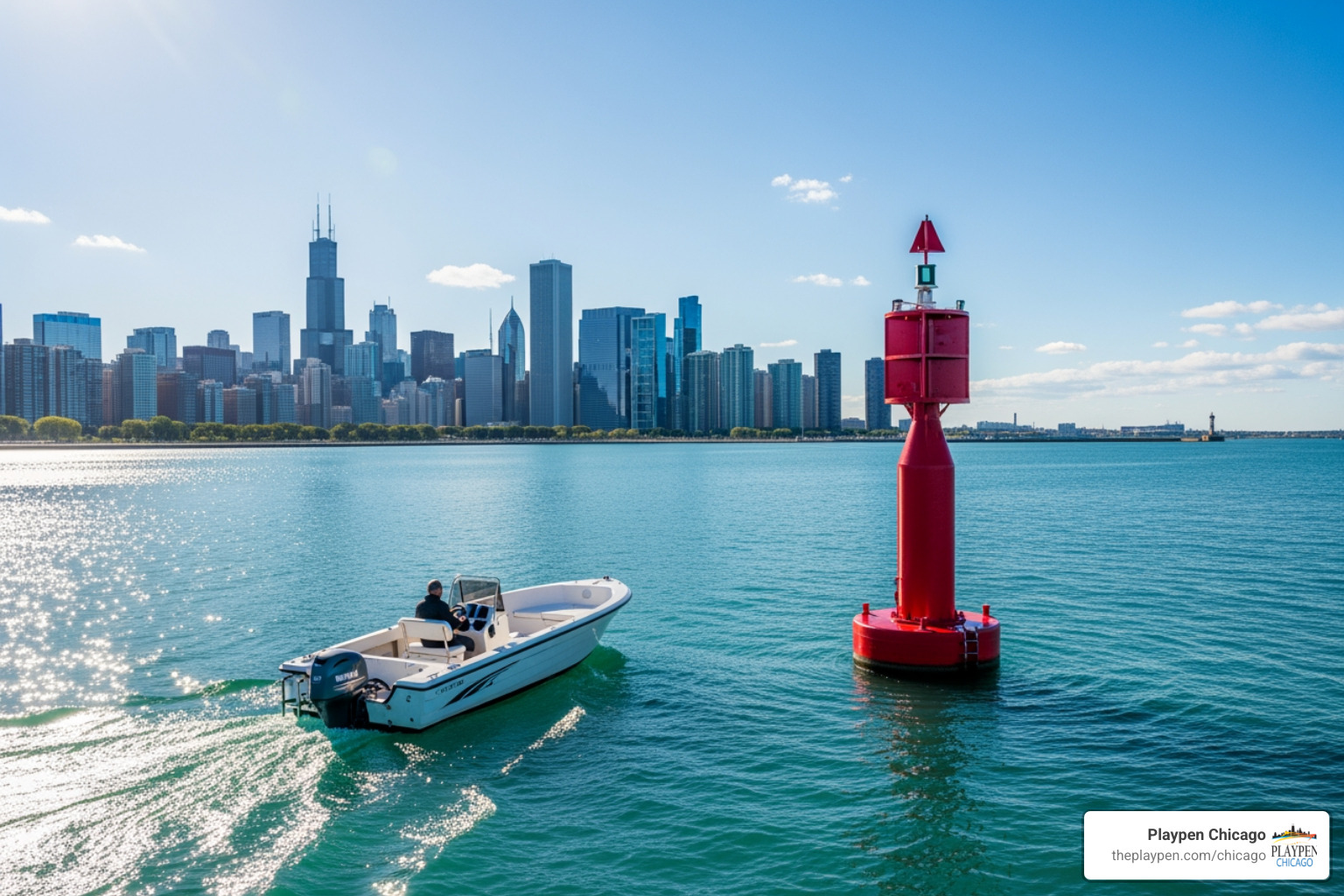
Boating on Lake Michigan presents challenges and thrills that differ from smaller, inland lakes. For a beginner boating guide to Chicago, understanding these nuances is key to a safe and enjoyable experience.
- Weather Awareness: Lake Michigan’s weather can change rapidly. A calm morning can quickly turn into a windy afternoon with significant waves. Always check the forecast before and during your trip. Winds from the north or northeast are known for creating large, choppy waves.
- Handling Waves: Even on calm days, wakes from larger vessels can be a factor. Learn to approach waves at a 45-degree angle to maintain stability.
- Navigation Tools: Use a combination of a GPS/chartplotter, a navigation app like Navionics, and always carry paper charts as a backup. A reliable compass is also essential.
- Rules of the Road: Remember the “Red, Right, Returning” rule. When returning from the open lake into a harbor or river, keep the red buoys on your right (starboard) side.
- Marine Forecasts: Tune into NOAA weather radio for real-time updates on wind, waves, and any advisories. As a beginner, it’s wise to avoid winds over 20 MPH or waves exceeding 4 feet.
Launching & Fueling: Chicago Harbor Logistics
Chicago’s Park District operates the nation’s largest municipal harbor system, with 10 harbors along the lakefront. This makes getting on the water convenient if you know where to go.
For those trailering their boats, there are three primary public boat launches:
- 31st Street Harbor: A modern, 1,000-slip marina. Its launch is for powerboats only and is closed on weekends during peak season.
- Burnham Harbor: Located near Soldier Field and the Museum Campus, its launch is for powerboats only and is open seven days a week.
- Diversey Harbor: The only launch on the north side that permits personal watercraft (PWC), open seven days a week for powerboats and PWCs.
When it comes to fueling up, several harbors offer fuel docks, including Belmont, Diversey, Burnham, 31st Street, and Jackson Park Harbors. It’s always a good idea to call ahead to confirm operating hours. Most of these locations also have pump-out stations for waste disposal.
The Chicago Lock & River System
One of Chicago’s most iconic boating features is the Chicago Harbor Lock, which connects Lake Michigan to the Chicago River system. It’s the busiest lock in the United States and operates 24/7.
Here’s what you need to know for lock procedures:
- Safety First: Life jackets are required for all passengers while in the lock.
- Use Fenders: Have at least three fenders ready to protect your boat from the concrete lock walls.
- Handle Lines Correctly: Lock tenders will drop lines down to you. Hold these lines to keep your boat stable as the water level changes, but do not tie them to your cleats.
- Communicate: Use VHF radio Channel 14 to contact the lockmaster for permission to enter and exit.
Once through the lock, you’ll enter the Chicago River. This waterway offers incredible views but is also a busy commercial channel. Be aware of tour boats and barges, which have the right-of-way due to their limited maneuverability. Always give them plenty of space and be mindful of no-wake zones. For those interested in paddling, you can find more information on Chicago River paddling safety.
The Fun Part: Top Destinations & Activities
Now for the really exciting stuff! Chicago’s waterways aren’t just for getting from point A to point B; they’re destinations in themselves, offering endless opportunities for fun and unforgettable memories.
Must-Visit Chicago Boating Destinations
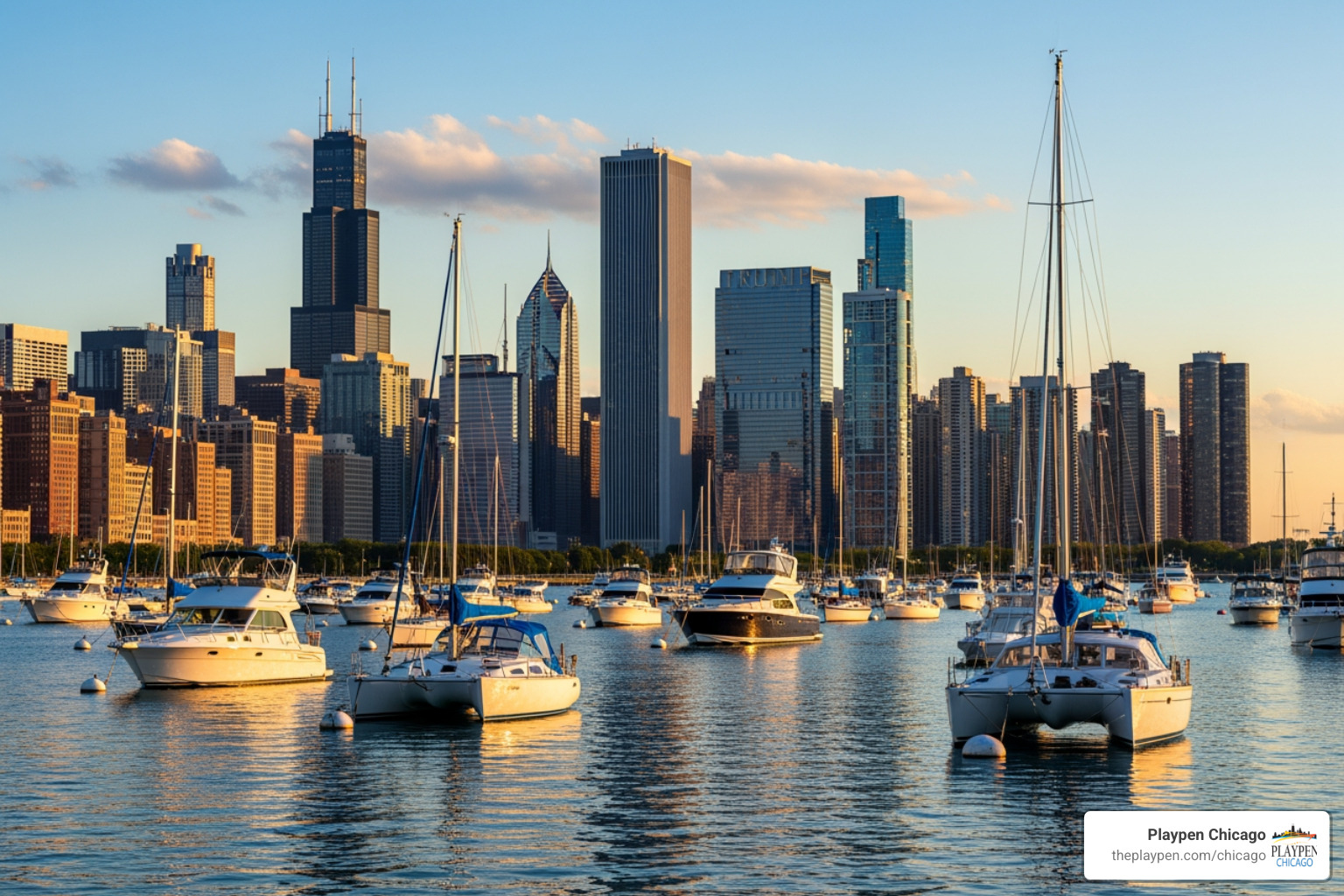
When we talk about Chicago boating, a few spots immediately come to mind that are simply iconic.
- The Playpen: This famous stretch of water just north of Navy Pier is undeniably the social heart of Chicago’s boating scene. On any given nice summer day, hundreds of boats will anchor here, creating a vibrant, floating party atmosphere. It’s a protected area, offering relatively calm waters and incredible views of the city skyline. The average depth of the Playpen is about 12 feet, making it suitable for most recreational boats to anchor. It’s a must for those looking to experience Chicago boating and socialize with fellow enthusiasts. Just remember to maintain a safe distance from other boats and break walls (at least 100 yards in the Playpen).
- Cruising the Shoreline for Skyline Views: One of the most breathtaking experiences we can have is cruising along Chicago’s magnificent shoreline. From Belmont Harbor south to the outer perimeter of the Playpen, the city’s architectural masterpieces rise majestically from the land. It’s a perspective of Chicago that few get to see, offering unparalleled photo opportunities and a sense of awe at our city’s grandeur.
- Navy Pier Fireworks Viewing: Imagine having a front-row seat to a spectacular fireworks display, with the city lights twinkling around us. Navy Pier hosts fireworks shows every Wednesday and Saturday during the summer season, and viewing them from our boat on Lake Michigan is an absolutely magical experience. It’s an ideal activity for special occasions or just a memorable evening out.
- Monroe Crib: For a slightly different anchoring and swimming experience, the Monroe Crib is another popular spot. It’s an underwater structure (a former water intake crib) that attracts boaters for swimming and enjoying the open water, a bit further out than the Playpen.
Popular On-Water Activities
Beyond simply cruising, Chicago’s waters offer a plethora of activities to make our boating days truly special.
- Socializing and Raft-Ups: The Playpen is the prime example, but anywhere boats gather, there’s an opportunity for socializing. Raft-ups, where multiple boats tie together, create instant floating communities, perfect for sharing food, drinks, and good times.
- Fishing on the Lake or River: Chicago offers fantastic fishing opportunities. Lake Michigan is renowned for its diverse fish population, including trout and salmon, while the Chicago River is home to over 70 species of fish. Before dropping a line, we’ll need a valid Illinois fishing license. You can get your fishing license online right here.
- Watersports: For the adrenaline junkies among us, Lake Michigan is perfect for watersports. Whether it’s the thrill of wakeboarding, the speed of jet skiing, or the simple joy of tubing behind our boat, the open waters offer plenty of space to play.
- Attending On-Water Events: Chicago’s boating community loves a good celebration! From regattas and poker runs to large-scale events like the Chicago Scene Party (a massive annual raft-up in the Playpen), there’s almost always something happening on the water during the summer. These events are fantastic ways to experience the vibrant boating culture. To stay in the loop and find what’s happening, check out Discover Chicago’s best boating events.
Pro Tips & FAQs for Chicago Boating
Becoming a confident boater is a journey, not a destination. These tips and answers to common questions will help you steer through some of the trickier aspects and ensure you’re always boating responsibly.
Docking and Anchoring Like a Pro
These two maneuvers often cause the most anxiety for new boaters, but with practice and a few key techniques, you’ll be handling them like a seasoned pro.
Docking Best Practices:
- Slow and Steady Wins the Race: Approach the dock at the slowest possible speed—idle speed, no more. This gives you more time to react and correct.
- Wind and Current Awareness: Wind and current are your biggest adversaries (or allies!) when docking. Always try to approach the dock into the wind or current if possible, as this gives you more control. Know the wind direction and factor it into your approach.
- Controlled Movements: Use small “clicks” in and out of gear rather than continuous throttle. This allows for precise, controlled movements. Avoid revving the engines; a little burst of power often leads to overcorrection.
- Using Fenders and Dock Lines: Before approaching, ensure your fenders are positioned correctly along the side of the boat that will meet the dock. You should have at least 4-5 dock lines ready: bow, stern, and spring lines. Spring lines are particularly useful as they help control fore and aft movement. If you’re new, it’s a great idea to practice docking in calm conditions for an hour or two.
Anchoring Techniques:
- Calculating Scope: “Scope” refers to the ratio of the length of your anchor line (and chain) to the depth of the water. The standard recommendation is to use a scope of 5-7 times the depth. So, if you’re in 10 feet of water, you should deploy 50-70 feet of line. This ensures the anchor has enough horizontal pull to dig in and hold. For the Playpen’s average depth of 12 feet, you should use at least 60 feet of chain/line.
- Marking Your Line: If your anchor line isn’t already marked, you should mark it every 25 feet. This makes it easy to know how much line you’ve deployed.
- Setting the Anchor: Approach the desired anchoring spot, point your boat into the wind or current, and stop. Then, slowly lower the anchor. Once it hits the bottom, gently reverse your boat for at least 30 seconds to allow the anchor to dig in and “set.” You should feel a firm tug if it’s set properly.
- Using an Anchor Alarm: An anchor alarm, often available as an app (like Anchor Pro) on your phone, uses GPS to alert you if your boat drifts outside a predetermined radius. This is a fantastic tool for peace of mind, especially if you plan to swim or relax.
Boating Etiquette and Environmental Responsibility
Sharing the waterways means adhering to certain unspoken (and spoken) rules, ensuring everyone has a pleasant and safe experience. It also means being good stewards of our incredible natural resources.
Rules of the Road:
- Right-of-Way: Just like on land, there are rules governing who has the right-of-way. Generally, powerboats give way to sailboats (especially when under sail), and smaller vessels give way to larger, less maneuverable commercial vessels (like those on the Chicago River). Always assume the other boat hasn’t seen you!
- Managing Your Wake: Your boat’s wake can be a nuisance or even a danger to smaller boats, anchored vessels, or people swimming. Always be mindful of your wake, especially near shore, in crowded areas, or in designated no-wake zones. Slow down when passing other boats.
- Communication: A friendly wave or a clear signal can prevent misunderstandings. If you have a VHF radio, use it for non-emergency communication (on appropriate working channels, not Channel 16).
Environmental Stewardship:
- Preventing Invasive Species: Lake Michigan is a delicate ecosystem. To prevent the spread of invasive species, you must always follow the “Clean, Drain, Dry” principle. Clean your boat, trailer, and gear thoroughly; drain all water from the bilge, livewells, and engine; and allow everything to dry completely before launching in a different body of water.
- Proper Waste Disposal: Never, ever discharge trash, oil, fuel, or human waste directly into Lake Michigan or the Chicago River. Use designated pump-out stations at the harbors for waste tanks and always carry a trash bag to properly dispose of all garbage on shore. Let’s keep our beautiful waters pristine!
- Respecting Wildlife: Maintain a respectful distance from any wildlife you encounter. Avoid disturbing birds, fish, or other animals.
Frequently Asked Questions for First-Timers
We’re sure you have questions, and we’ve got answers! Here are some common queries from those just starting their Chicago boating journey.
Q: Do I need a license to drive a boat in Chicago?
A: In Illinois, a Watercraft Operator’s Permit (boating license) is required for certain individuals. Specifically, if you were born on or after January 1, 1998, you must have a valid boating safety certificate to operate a motorized vessel or supervise someone between 10 and 17 years old operating one. While not everyone needs one, completing a boating safety course and obtaining a certificate is highly recommended for all beginners, as it provides essential knowledge for safe operation.
Q: What are the biggest challenges for a beginner on Lake Michigan?
A: The biggest challenges often stem from the lake’s sheer size and unpredictable nature. Rapidly changing weather, strong winds, and large waves can quickly turn a pleasant outing into a difficult one. Additionally, navigating busy areas with commercial traffic (especially on the Chicago River) and mastering docking in windy conditions can be daunting for new boaters. Our advice? Start on calm days, gradually venture further, and always prioritize safety and weather monitoring.
Q: Can I rent a boat in Chicago as a beginner?
A: Absolutely! Renting a boat is a fantastic way to get started without the commitment of ownership. Many companies offer boat rentals in Chicago, and for beginners, we often recommend opting for a captained charter. This allows you to enjoy the experience, learn the ropes from a professional, and steer the unique challenges of Lake Michigan and the Chicago River with an experienced guide at the helm. It’s a stress-free way to dip your toes into the boating lifestyle and explore all that our city’s waterways have to offer.
Conclusion: Start Your Chicago Boating Adventure
We’ve covered a lot of ground in our beginner boating guide chicago, from the essential safety gear and regulations to navigating our unique waterways and finding the best spots to play. The key takeaways are clear: prioritize safety, be prepared for Lake Michigan’s dynamic conditions, and accept the sheer fun that comes with exploring our incredible city from the water.
Seeing Chicago’s iconic skyline, cruising past Navy Pier, or relaxing in the lively Playpen from the deck of a boat is an unparalleled experience. It’s a perspective that offers a fresh appreciation for our city’s beauty and vibrancy.
For those looking to join this incredible community, find exciting events, or book a charter to get started, the Playpen® Chicago platform connects you to the heart of the city’s boating scene. Whether you dream of captaining your own vessel or simply want to experience the thrill of a luxury yacht outing, we make it easy to find and participate.
So, what are we waiting for? The water is calling! Explore exclusive boat charters in Chicago and start your journey today!