
Boat Safety Key: Life-Saving 2025 Guide
Why Your Boat Safety Key Could Save Your Life
A boat safety key, formally known as an engine cut-off switch (ECOS) or kill switch, is a critical device that stops your boat’s engine if you’re thrown from the helm. Here’s what you need to know:
Quick Facts About Boat Safety Keys:
- What it is: A lanyard connecting the operator to the engine’s ignition system.
- How it works: When disconnected, it instantly kills the engine to prevent a runaway boat.
- Legal requirement: Federal law requires operators of boats under 26 feet to use them when on plane (as of April 2021).
- Why it matters: Prevents the “circle of death” where an unmanned boat circles back at high speed.
- Cost: Traditional lanyard systems are typically under $30.
When an operator is ejected without a kill switch, the boat can continue at high speed in unpredictable circles, creating extreme danger. The New Hampshire Marine Patrol states, “We have had numerous instances where people have drowned, been hit by the boat, suffered severe trauma and death” from not wearing engine cut-off switches.
Your boat safety key is a small piece of equipment that delivers massive protection. Whether you’re cruising Lake Michigan for Chicago’s Playpen parties or enjoying a quiet fishing trip, this device should be attached to you every time you operate your vessel.
What is a Boat Kill Switch and How Does It Work?
A boat safety key, or engine cut-off switch (ECOS), has one job: to stop your engine the instant you’re separated from the helm. A traditional kill switch uses a lanyard to connect you to a switch on the control panel. If you fall away from the controls, the lanyard pulls a key from the switch, breaking an electrical circuit and cutting power to the engine. The engine and propeller stop immediately.
This prevents the terrifying “circle of death,” where an unmanned boat continues at high speed, circling back toward the person in the water. The device’s simplicity is its strength; it works automatically without batteries or software, providing a reliable safety net.
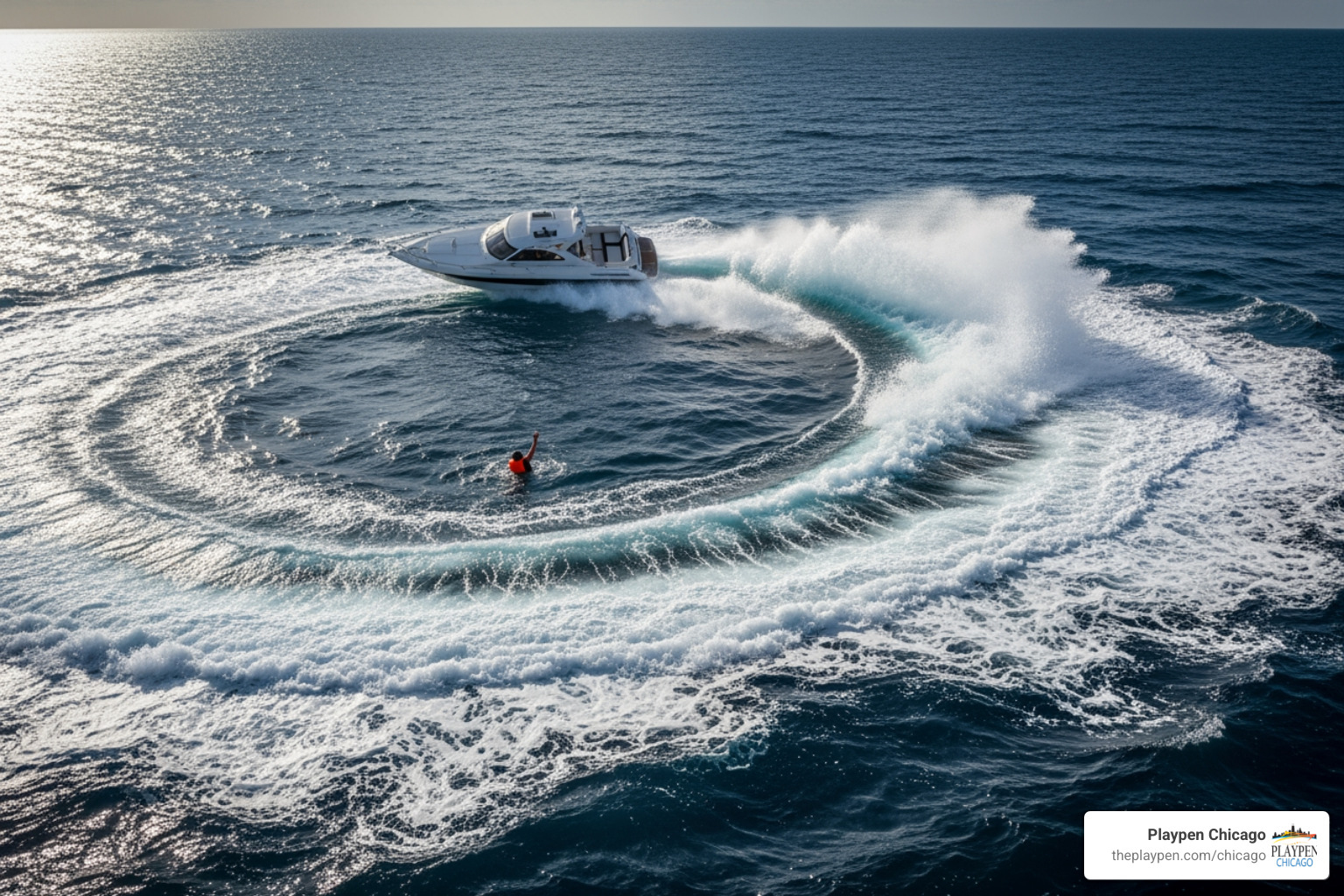
The Critical Safety Benefits
Your boat safety key provides multi-layered protection. Its primary benefit is protecting you, the operator, from being struck by your own vessel if you’re ejected. But the benefits extend further:
- Passenger Safety: An immediate engine shutdown prevents panic and gives passengers time to safely assess the situation and retrieve the operator.
- Swimmer Protection: It stops the propeller, protecting anyone in the water nearby—whether they’re with your party at the Playpen or just swimming in Lake Michigan.
- Property Protection: It prevents an unmanned boat from crashing into other vessels, docks, or the shoreline, avoiding costly damage and liability.
- Emergency Stop: The lanyard can be pulled manually for an instant engine stop in any emergency, such as a medical issue or a hazard ahead.
- Child Safety: It acts as a safeguard if a child at the helm accidentally engages the throttle.
Kill Switch Laws: What Boaters in the US and Canada Need to Know
Using your boat safety key on Lake Michigan isn’t just a smart choice—it’s the law.
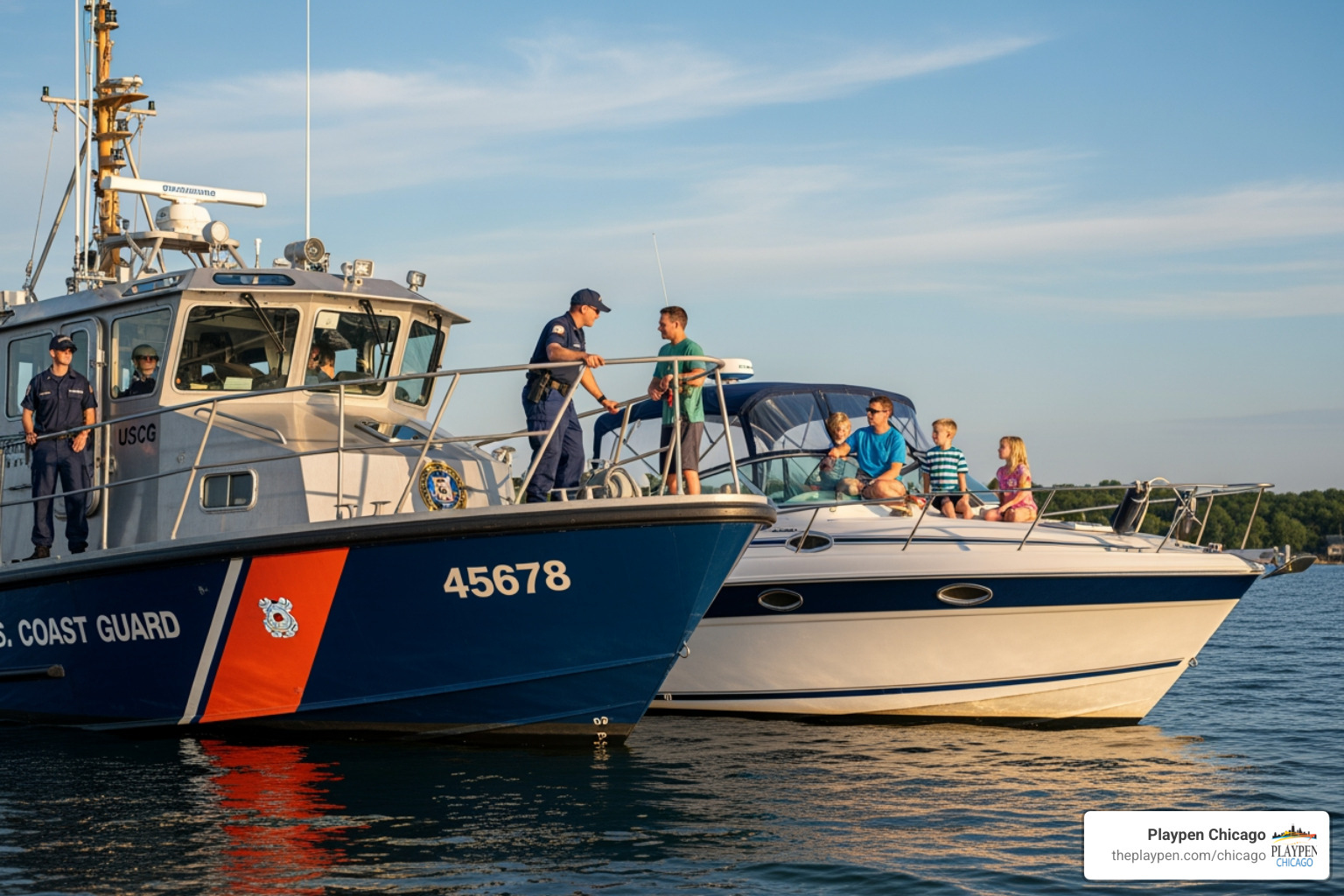
As of April 2021, a US federal law took effect requiring operators of boats under 26 feet to use an engine cut-off switch (ECOS) when operating on plane or above displacement speed. This rule applies to all US navigable waters, so whether you’re at the Playpen or cruising the shoreline, you must comply. While states may have additional rules, the federal law sets the baseline. For cross-border trips, check Transport Canada’s requirements as well.
The U.S. Coast Guard’s A Boater’s Guide to the Federal Requirements for Recreational Boats is a comprehensive resource all boaters should review.
Requirements and Consequences
The ECOS requirement applies to most recreational vessels under 26 feet, including Personal Watercraft (PWCs) and small powerboats like fishing boats and bowriders, whenever they are on plane.
Failure to comply has serious consequences:
- Fines: Federal fines for negligent operation can reach up to $5,000.
- Voyage Termination: Law enforcement, including the U.S. Coast Guard, can order you back to shore, ending your day on the water.
- Insurance Issues: If you’re in an accident without using your required ECOS, your marine insurance provider may deny your claim, leaving you liable for all damages and medical costs.
Using your boat safety key protects you, your passengers, and your finances.
Lanyard vs. Wireless: Choosing the Right Boat Safety Key System
When choosing a boat safety key system, you have two main options: the traditional lanyard and modern wireless systems. The best choice depends on your vessel, budget, and how you boat. Let’s compare.
Here’s a quick look at how they stack up:
| Feature | Traditional Lanyard Kill Switch | Wireless Kill Switch System (e.g., MOB+, 1st Mate) |
|---|---|---|
| Cost | Very affordable (often < $30) | Significantly higher (hundreds to thousands of dollars) |
| Design | Simple cord with clip and key/plug | Wearable FOBs (wrist, belt, PFD) and a base station hub connected to the engine |
| Movement | Restricts operator movement to a limited radius from the helm | Allows full freedom of movement anywhere on the boat; no physical tether |
| Installation | Simple plug-and-play for most modern boats; retrofitting older ones can be DIY or professional | More complex, often requires electrical wiring and integration with engine systems; professional installation recommended |
| Compatibility | Universal sets available, but specific engine brands (Yamaha, Mercury, Johnson, Evinrude, Honda, Tohatsu, Suzuki, Kawasaki, OMC, Nissan) may require specific clips | Often brand-agnostic (MOB+) or designed for specific engine brands (1st Mate for Mercury, etc.) |
| Passenger Safety | Primarily protects operator; no direct passenger protection | Can protect multiple passengers with individual FOBs; some systems include passenger alarm/tracking |
| Additional Features | Basic engine cut-off | Man Overboard (MOB) alerts, anti-theft, geo-fence, distress messaging, security zones |
| Best Use Cases | Smaller boats, PWCs, budget-conscious boaters, those who stay at the helm | Larger vessels, active boaters (fishing, watersports), those desiring maximum freedom and advanced features, multi-passenger vessels |
| Pros | Inexpensive, simple, reliable, universally understood | Freedom of movement, multi-person protection, advanced features, reduced risk of false alarms (no snagging) |
| Cons | Restricts movement, can be forgotten/misplaced, requires conscious attachment | Higher cost, battery dependence for FOBs, potential for signal interference (rare), more complex installation |
Traditional Lanyard-Style Boat Safety Key
The traditional lanyard-style boat safety key is a classic for a reason: it’s simple, reliable, and highly cost-effective, with replacements often costing under $30. The design consists of a coiled cord that clips to the operator and a key that plugs into the dash. This direct physical connection is foolproof. However, be mindful of compatibility. While universal kill switch key sets are available, many lanyards are brand-specific for engines like Yamaha, Mercury, Mercruiser, OMC, Johnson, and Evinrude. Ensure the clip fits your switch securely. The main drawback is restricted movement, as the operator is tethered to the helm, which can be inconvenient.
Modern Wireless Kill Switch Systems
For boaters seeking more freedom and advanced features, modern wireless kill switch systems offer a tether-free solution using Man Overboard (MOB) technology. Systems like MOB+ by Fell Marine (you can explore MOB+ wireless systems here) have revolutionized boat safety.
These systems use:
- Wearable FOBs: Small, waterproof devices worn by the operator and passengers.
- Base station hub: A unit installed on the boat that communicates with the FOBs and is wired to the engine.
The primary benefit is freedom of movement. You can move anywhere on deck without being tethered. If a person wearing an active FOB falls overboard, the connection is lost, and the engine stops instantly. Many systems also offer a passenger alarm function, alerting you if a passenger goes overboard. Advanced systems like 1st Mate may also include anti-theft features, geo-fencing, and distress messaging via a mobile app. While more expensive, the improved safety and freedom make them a worthy investment, especially for larger boats or active boaters on Lake Michigan.
Proper Use, Installation, and Maintenance of Your Boat Safety Key
Knowing the rules for a boat safety key is one thing; making its use a habit is what truly provides protection. Your ECOS should be a key part of your pre-departure check, a routine as automatic as checking the weather before heading out on Lake Michigan. As the operator, you set the safety standard. For a full pre-departure list, consult an Essential Boating Safety Checklist.
When our passengers see us wearing our boat safety key without fail, they understand that safety isn’t optional—it’s just how we do things.
How to Correctly Use Your Boat Safety Key
The golden rule is to wear your boat safety key every time the engine is running—not just when on plane as the law requires. Accidents can happen at any speed. Attach the lanyard securely to a sturdy point on your body or gear:
- Your wrist
- A D-ring or reinforced loop on your life jacket (PFD)
- A robust belt loop on your pants or shorts
Ensure the lanyard is short enough to pull the key if you fall but long enough for comfortable movement at the helm. While the law only mandates use when on plane, best practice is to wear it whenever the engine is on. It’s a simple, life-saving habit.
Installation and Troubleshooting
Most new boats have factory-installed kill switches. If you’re retrofitting an older boat, DIY kits are available, but professional installation is recommended if you’re not comfortable with marine electrical systems.
Regularly inspect your lanyard for wear and tear, especially UV damage, cracks in the plastic, and fraying or stretching of the cord. If you see any damage, replace it immediately. Lanyards are inexpensive, and a faulty one is a major safety risk.
Testing the switch should be part of your routine. Before each trip, with the engine off, pull the key and confirm the engine won’t start. If the engine is running at idle in a safe location, pulling the key should kill it instantly. Finally, always carry a spare lanyard on board. A lost or broken lanyard shouldn’t force you to choose between ending your trip and boating unsafely.
Frequently Asked Questions about Boat Kill Switches
Even with all the fantastic information we’ve shared, a few common questions and misconceptions about boat safety keys often pop up. Let’s clear them up. Our goal is to ensure everyone stays as safe and enjoys their time on the water, whether you’re cruising Lake Michigan or joining a lively Playpen Chicago event.
Do I have to wear my kill switch even when docking or trolling?
While the federal law technically applies only when “operating on plane,” the answer from a safety perspective is yes, you absolutely should. This is a classic case of legal requirements vs. best practices. Accidental throttle engagement, especially with sensitive modern controls, or an unexpected wake can throw you off balance even at low speeds. An idling propeller is still extremely dangerous. Wearing your boat safety key at all times when the engine is running is a simple habit that provides a massive safety gain.
Can I use any lanyard with my boat’s kill switch?
Not necessarily. While the concept is universal, the physical clips are often not interchangeable due to brand-specific keys for manufacturers like Yamaha, Mercury, and Johnson. Using a lanyard with an improper fit can cause it to vibrate loose or fail in an emergency. To avoid this, either buy a replacement made for your specific engine or purchase a universal kill switch key set, which comes with multiple clips to ensure a secure connection.
What happens if a passenger falls overboard?
This highlights a key difference between system types. With a traditional lanyard, the ECOS is an operator-only function. If a passenger falls overboard, the engine will continue to run, and the operator must manually shut it off. This is where how wireless systems protect passengers more effectively. Systems using Man Overboard (MOB) technology allow passengers to wear their own wireless FOBs. If anyone wearing a FOB falls into the water, the engine shuts down automatically. This is a significant safety upgrade, especially for crew safety on larger vessels or boats with children.
Conclusion
So, there you have it! The boat safety key, whether it’s the classic lanyard or a fancy new wireless system, isn’t just another gadget on your boat. It’s a true lifeline, a non-negotiable part of keeping everyone safe on the water. We’ve talked about how it works, why it’s the law in the US, and all the different options out there.
The most important takeaway? Wear it every time. Seriously, it’s that simple. This one small action – clipping that boat safety key to yourself – can stop terrible accidents from happening. It protects you, your friends and family, and even other boaters and swimmers enjoying Lake Michigan. It’s a simple habit that gives you a huge amount of peace of mind.
Here at Playpen Chicago, we truly believe that safe boating makes for better boating. When you know you’re protected, you can relax and really soak up all the fun. Using essential safety gear like the boat safety key means you get to enjoy every thrilling moment on the water, without the worry.
We’re all about creating amazing, safe experiences for our community. We want everyone to dive into Chicago’s lively boating scene and unique events with confidence. Come join us! Explore Chicago’s premier boating community and events and find unforgettable times, all while keeping safety first.