
BUI or BYOB? Understanding Alcohol Rules on Chicago Waterways
Alcohol on Chicago Boats: What You Need to Know
When enjoying Chicago’s beautiful waterways, many people wonder, is alcohol allowed on boats in Chicago? The quick answer is: it depends on who is drinking and their role on the boat.
Here’s a breakdown:
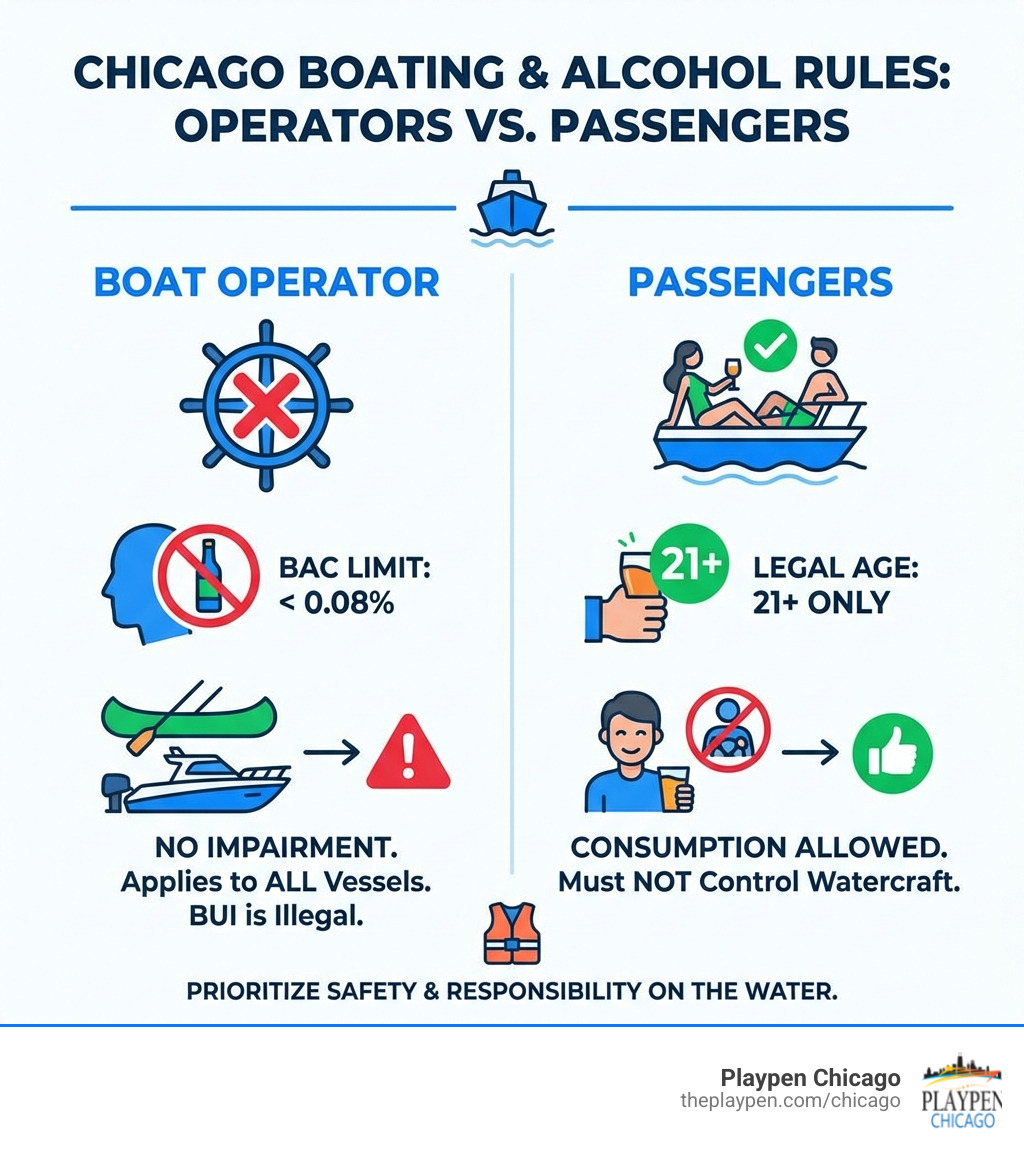
- For Boat Operators: No. It is strictly illegal to operate a boat with a Blood Alcohol Concentration (BAC) of 0.08% or higher, or while impaired by any drugs. This applies to all types of vessels, even canoes and rowboats.
- For Passengers (21+): Yes. Passengers who are 21 years of age or older can legally consume alcohol on a boat in Illinois waters, provided they are not the one controlling the watercraft.
Operating a boat under the influence (BUI) is incredibly dangerous. In fact, authorities say it can be even riskier than driving under the influence, as waterways lack lane markers and seatbelts. Prioritizing safety and responsible enjoyment is key for everyone on board.
Heidi Auvenshine, Partnership and Marketing Director for Playpen Chicago, brings deep experience in Chicago’s waterfront social scene and a clear understanding of is alcohol allowed on boats in Chicago. Her insights help both seasoned boaters and newcomers navigate the rules for premium on-the-water experiences.
Is alcohol allowed on boats in chicago? The Legal Breakdown
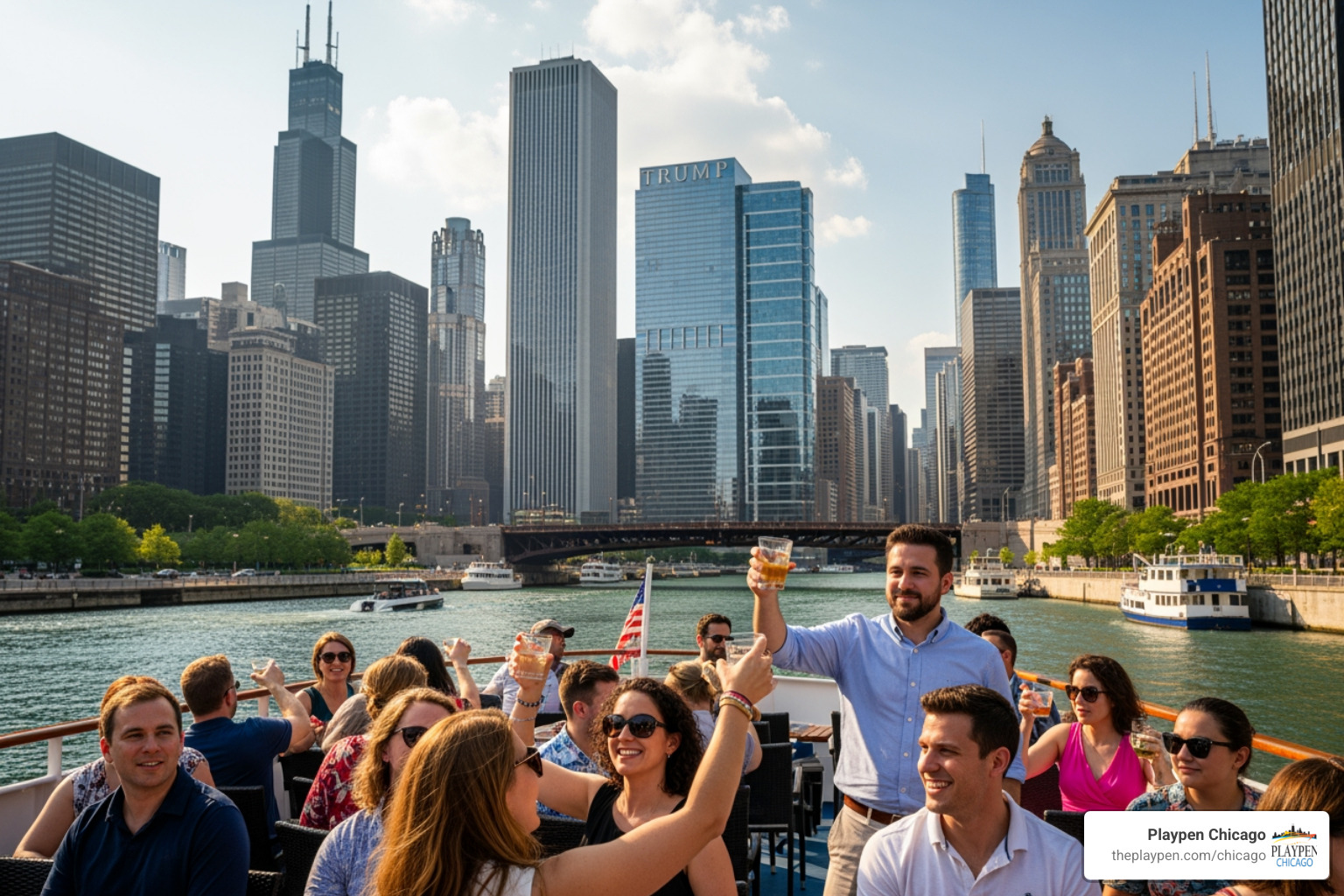
Navigating the legalities of drinking on Lake Michigan or the Chicago River requires a clear understanding of the roles on board. The primary distinction made by Illinois law is between the “operator”—the person in physical control of the vessel—and the “passengers.”
According to the Illinois Boat Registration and Safety Act, no person may operate any watercraft while under the influence of alcohol, drugs, or a combination of both. In Illinois, “under the influence” is legally defined as having a Blood Alcohol Concentration (BAC) of 0.08% or higher. However, you can still be charged if you are impaired to a degree that renders you incapable of safe operation, even if your BAC is lower than the 0.08% threshold.
Unlike motor vehicles on land, Illinois does not have a “strict” open container law that applies to passengers on a boat. On a typical car trip, having an open bottle of whiskey in the backseat is a ticketable offense. On a boat, the rules are more relaxed for those not at the helm. Passengers are generally permitted to have open containers and consume alcohol, provided they are of legal drinking age.
Is alcohol allowed on boats in chicago for passengers?
For many of us at Playpen Chicago, a summer Saturday isn’t complete without a cold beverage while anchored in the sun. If you are a passenger, the law is on your side—with a few caveats.
First, you must be 21 years of age or older. Second, you must not be in “actual physical control” of the boat. This means if the captain jumps in the water for a swim and asks you to “hold the wheel” while you have a beer in your hand, you have technically become the operator and are subject to BUI laws.
Responsible consumption is still the gold standard. Alcohol can impair your balance, making you more likely to fall overboard, and it accelerates the effects of dehydration and heatstroke. For a deeper dive into the nuances of local regulations, check out more info about Chicago boating laws.
Is alcohol allowed on boats in chicago commercial charters?
If you are booking a yacht through a service or finding a captain on our platform, the rules regarding alcohol often depend on the type of charter.
- Bareboat Charters: In a bareboat arrangement, you (the charterer) essentially take temporary ownership of the vessel. You are responsible for bringing your own food and drinks. Most bareboat charters in Chicago are “BYOB,” but captains usually request that you avoid glass bottles (to prevent breakage on deck) and staining liquids like red wine or cranberry juice that can ruin expensive upholstery.
- Captained/Commercial Vessels: For larger commercial vessels that carry more than six passengers, the rules are stricter. According to the Chicago Park District Code, commercial permittees are not allowed to sell or even permit the consumption of alcohol on their boats without specific written approval from the harbor and the appropriate liquor licenses.
Always confirm the alcohol policy with your captain or host before you board. Some may have specific rules about where you can drink or what types of mixers are allowed.
Boating Under the Influence (BUI) and Implied Consent
When we talk about “BUI” (Boating Under the Influence) or “OUI” (Operating Under the Influence), we are talking about a serious criminal offense. Law enforcement agencies in Chicago take this very seriously because the stakes are so high. In 2023, Illinois saw 70 boating accidents resulting in 12 deaths. Two of those fatalities were directly linked to alcohol or drug impairment.
The Illinois Department of Natural Resources handbook outlines that the 0.08% BAC limit is the standard for intoxication. However, “impairment” also covers marijuana (even though it is legal for recreational use in Illinois), prescription meds, and illegal controlled substances. If a Conservation Police officer observes you weaving through traffic or struggling to dock, they have the authority to stop you and perform a sobriety check.
Implied Consent and Test Refusal
Many boaters don’t realize that by operating a boat on Illinois waters, they have already given “implied consent” to chemical testing. This means if an officer has reasonable cause to believe you are operating under the influence, you are legally required to submit to a breathalyzer, blood, or urine test.
What happens if you refuse?
- Automatic Suspension: Refusal to submit to testing results in the automatic loss of your boat operating privileges for 2 years.
- Evidentiary Consequences: Your refusal can be used against you in court as evidence of “consciousness of guilt.”
Law enforcement officers, including the Illinois Department of Natural Resources (IDNR) and local Sheriffs, have the authority to stop and board any boat to check for safety equipment and compliance with BUI laws.
Federal vs. State Enforcement
Chicago boaters deal with a “triple threat” of enforcement. Depending on where you are, you might encounter:
- U.S. Coast Guard (USCG): They enforce federal BUI laws. Federal law applies to all boats, including non-motorized ones like canoes.
- Illinois Conservation Police (ICP): These are the primary enforcers of the Illinois Boat Registration and Safety Act. They are very active during holiday weekends like Memorial Day and the Fourth of July.
- Chicago Police Marine Unit: They patrol the harbors, the Chicago River, and the nearshore waters of Lake Michigan.
These agencies often work together. If the Coast Guard stops you for a BUI in federal waters, they may hand you over to the state authorities for processing under Illinois law.
Penalties for OUI and BUI in Illinois
The consequences of a BUI conviction are designed to be a deterrent. They are not just “slaps on the wrist”; they can affect your bank account, your freedom, and your future.
A first-time BUI conviction in Illinois is typically classified as a Class A misdemeanor. According to the legal standards for Class A misdemeanors, this can result in:
- Fines of up to $2,500.
- Jail time of up to one year.
- Suspension of boating privileges.
If the offense involves aggravating factors—such as a second offense, operating with a child under 16 on board, or causing an accident that results in “great bodily harm”—the charge can jump to a Class 4 felony. A felony conviction carries a potential prison sentence of up to three years.
| Offense Level | Potential Fine | Potential Jail/Prison Time | Other Penalties |
|---|---|---|---|
| First Offense (Misdemeanor) | Up to $2,500 | Up to 1 Year | Loss of operating privileges |
| Refusal of Chemical Test | N/A | N/A | Automatic 2-year suspension |
| Subsequent Offense (Felony) | Up to $25,000 | 1 – 3 Years | Permanent record, loss of rights |
| BUI involving Injury/Death | Up to $25,000 | 1 – 12 Years | Felony conviction |
Rules for Chicago Harbors and the Playpen
The “Playpen”—that famous stretch of water near Ohio Street Beach—is the heart of Chicago’s summer social scene. While it’s a place for fun, it is also a highly regulated area. The Chicago Park District manages the harbors (like 31st Street, Monroe, and DuSable) and sets specific rules for conduct.
One of the most important rules is the Quiet Hours policy, which runs from 11:00 p.m. to 7:00 a.m. During these times, excessive noise and loud partying can lead to fines or even the revocation of your harbor permit. Furthermore, while passengers can drink, “public intoxication” that leads to disorderly conduct or disturbs the peace is grounds for being removed from the harbor system. For more on staying safe while anchored, see our safety tips for the Playpen.
Commercial Sales and Service Rules
You cannot simply pull your boat up to the Playpen and start selling margaritas to passing vessels. Selling alcohol on the water requires a complex web of city liquor licenses and written harbor approval.
Most charter operators on Playpen Chicago are “Bareboat,” meaning the renter provides the alcohol. If you are on a larger “Inspected” vessel (one that has a Coast Guard Certificate of Inspection), the vessel might have its own liquor license and provide the drinks for you. In these cases, you might actually be prohibited from bringing your own booze—much like you can’t bring your own beer into a bar.
Safety Recommendations for Sober Boating
At Playpen Chicago, we want every outing to be memorable for the right reasons. Here are our top safety recommendations:
- Designated Skipper: Just like on land, always have a designated operator who stays 100% sober. This person is responsible for the lives of everyone on board.
- Hydration is Key: For every alcoholic drink, have a bottle of water. The “Sun Effect” is real—heat and sun exposure can double the effects of alcohol.
- Life Jackets for All: Illinois law requires one wearable USCG-approved life jacket for every person on board. Children under 13 must wear them whenever the boat is in motion.
- Weather Awareness: Alcohol slows your reaction time. In the event of a sudden Lake Michigan squall, you need your wits about you to secure the vessel. Check out our essential boat safety guide for more tips.
Frequently Asked Questions about Alcohol on Chicago Boats
What is the legal BAC limit for boaters in Chicago?
The legal limit is 0.08%. However, you can be arrested if an officer determines you are impaired, even if you are below that number. If you feel “buzzed,” you are likely too impaired to operate a 20-ton yacht safely.
Can I be arrested for BUI if my boat is anchored?
Yes. Under Illinois law, “operating” can be interpreted broadly. If the engine is running, or if you are in a position to easily put the boat in motion while intoxicated, you can be charged. Law enforcement has discretion here, but why risk it? If you’re the captain, stay sober until the boat is safely tucked into its slip for the night.
Who enforces alcohol laws on Lake Michigan?
The primary agencies are the U.S. Coast Guard, the Illinois Department of Natural Resources (IDNR) Conservation Police, and the Chicago Police Department (CPD) Marine Unit. They often conduct joint “saturation patrols” during holiday weekends.
Conclusion
Understanding is alcohol allowed on boats in Chicago is about more than just avoiding a fine—it’s about preserving the lifestyle we all love. Chicago’s waterways offer a world-class experience, from the towering skyscrapers along the river to the vibrant raft-ups in the Playpen. By keeping the operator sober and the passengers responsible, we ensure that the party continues all summer long.
Whether you’re looking to list your boat for a bareboat rental, find a USCG-licensed captain, or join an exclusive yacht soirée, Playpen Chicago is your gateway to the best of Lake Michigan. Our community is built on social connection and premium experiences, all while respecting the laws that keep our waters safe.
Ready to dive in? Join the Playpen Chicago community today and start discovering the ultimate Chicago boating lifestyle. From fireworks cruises to luxury pop-ups, we’ll see you on the water!