
Charter permit requirements: 7 Essential Steps for Success
Why Charter Permit Requirements Matter for Lake Michigan Operations
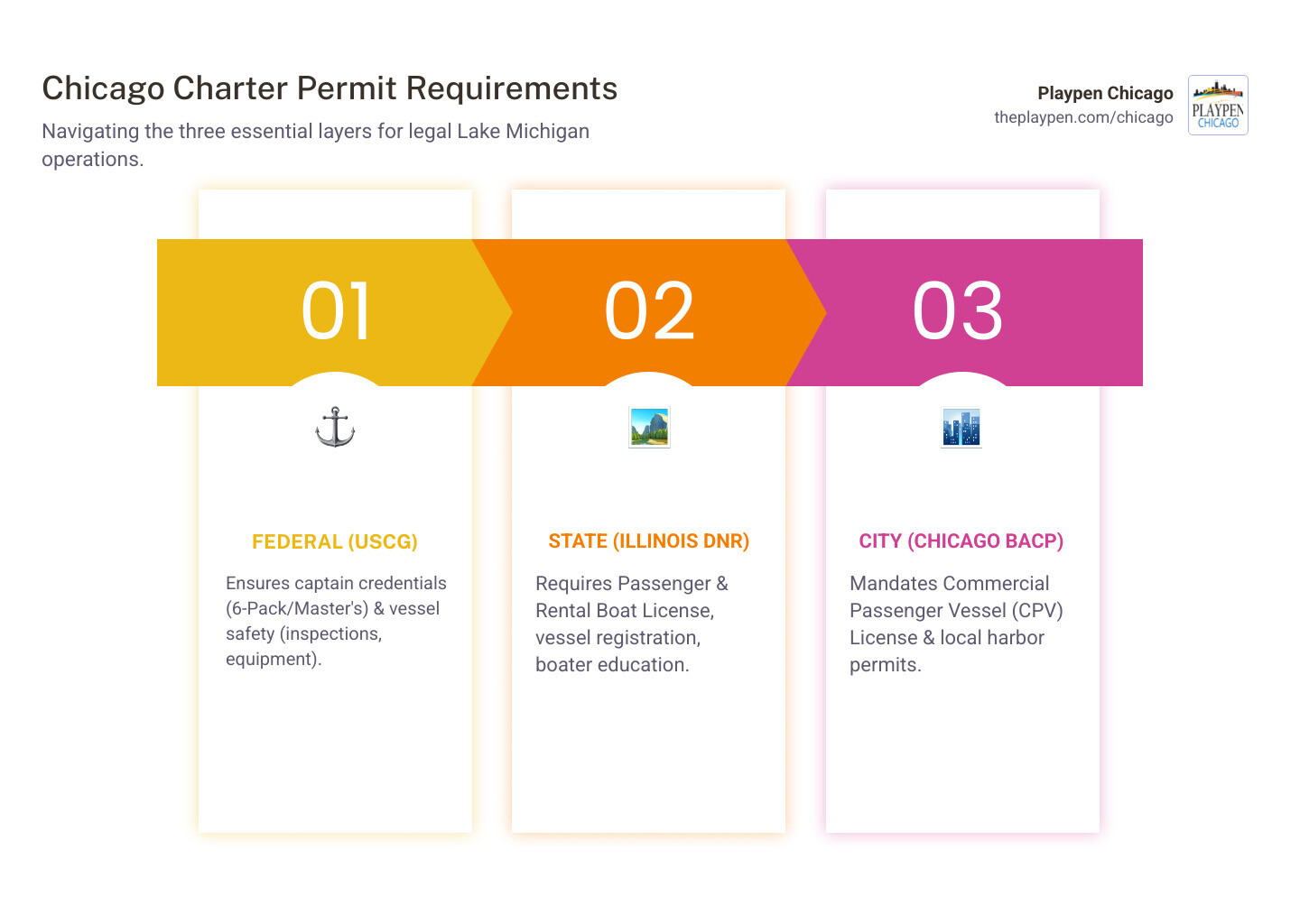
Charter permit requirements for operating on Lake Michigan involve three distinct regulatory layers: federal credentials from the U.S. Coast Guard, state licensing from the Illinois Department of Natural Resources, and city permits from Chicago’s Department of Business Affairs and Consumer Protection.
Quick Answer: What You Need to Operate a Charter in Chicago
- Federal Level: Valid USCG Captain’s License (6-Pack or Master’s, depending on passenger count)
- State Level: Illinois DNR Passenger & Rental Boat License ($50 per vessel annually)
- City Level: Chicago Commercial Passenger Vessel (CPV) License ($75 for 1-19 passengers or $350 for 20+ passengers annually)
- Always Required: Commercial marine insurance, vessel registration, and safety inspections for vessels carrying 7+ passengers
The regulatory landscape for charter operations in Chicago changed significantly in 2023. As Chicago Harbors announced, they “will no longer grant Bareboat or 6 Passenger Permits due to changes in US Coast Guard guidance,” requiring all commercial permit holders to submit new applications following updated federal standards.
Whether you’re planning to offer fishing charters, luxury yacht experiences, or sightseeing tours on Lake Michigan, understanding these charter permit requirements isn’t optional—it’s the foundation of operating legally. Operating without proper permits can result in fines up to $50 per violation, vessel seizure, and even criminal misdemeanor charges. More importantly, your insurance becomes invalid without proper licensing, leaving you personally liable for any accidents.
The good news? Once you understand the system, compliance becomes straightforward. Each regulatory layer serves a specific purpose: the Coast Guard ensures your captain is qualified and your vessel is safe, the state tracks commercial vessels operating on Illinois waters, and the city regulates commercial activity within Chicago’s jurisdiction.
The Foundation: Federal USCG and Vessel Requirements
Before you can welcome your first guests aboard for a Chicago charter, you need to understand the federal layer of regulation. The U.S. Coast Guard sets the baseline standards for anyone operating a vessel for hire on Lake Michigan—and these requirements aren’t negotiable.
Think of the USCG as the foundation of your charter operation. Their job is straightforward: make sure vessels are safe and captains are qualified. Since Lake Michigan qualifies as navigable federal waters, every commercial boat operating here falls under Coast Guard jurisdiction. This means both you (the operator) and your vessel must meet specific federal standards before you can legally carry paying passengers.
The Captain’s License: Your Ticket to Operate
Here’s the reality: you can’t legally operate a charter without a USCG Captain’s License. Period. This credential—officially called a Merchant Mariner Credential—proves you have the knowledge, experience, and physical capability to safely command a vessel carrying passengers for hire.
The type of license you need depends entirely on how many passengers you plan to carry. For smaller operations carrying up to six paying passengers, you’ll need an OUPV (Operator of Uninspected Passenger Vessels) License, commonly called a “6-Pack” License. This is the entry point for most charter operators starting out on Lake Michigan.
Planning to carry seven or more passengers? You’ll need a Master Captain’s License instead. This credential requires more extensive sea time and demonstrates a higher level of expertise and responsibility.
Getting either license requires documenting your time on the water (called sea time requirements), passing a comprehensive written exam covering navigation and safety regulations, and completing a physical exam to confirm you meet USCG health standards. The process takes time and commitment, but it’s essential for legal operation.
If you’re ready to start this journey, learn how to get your captain’s license through our partner Mariners Learning System. They specialize in helping aspiring charter operators steer the credentialing process.
A Deeper Dive into Federal Charter Permit Requirements
Your captain’s license is just one piece of the federal puzzle. The Coast Guard also has strict requirements for the vessel itself, and these charter permit requirements vary based on how many passengers you carry.
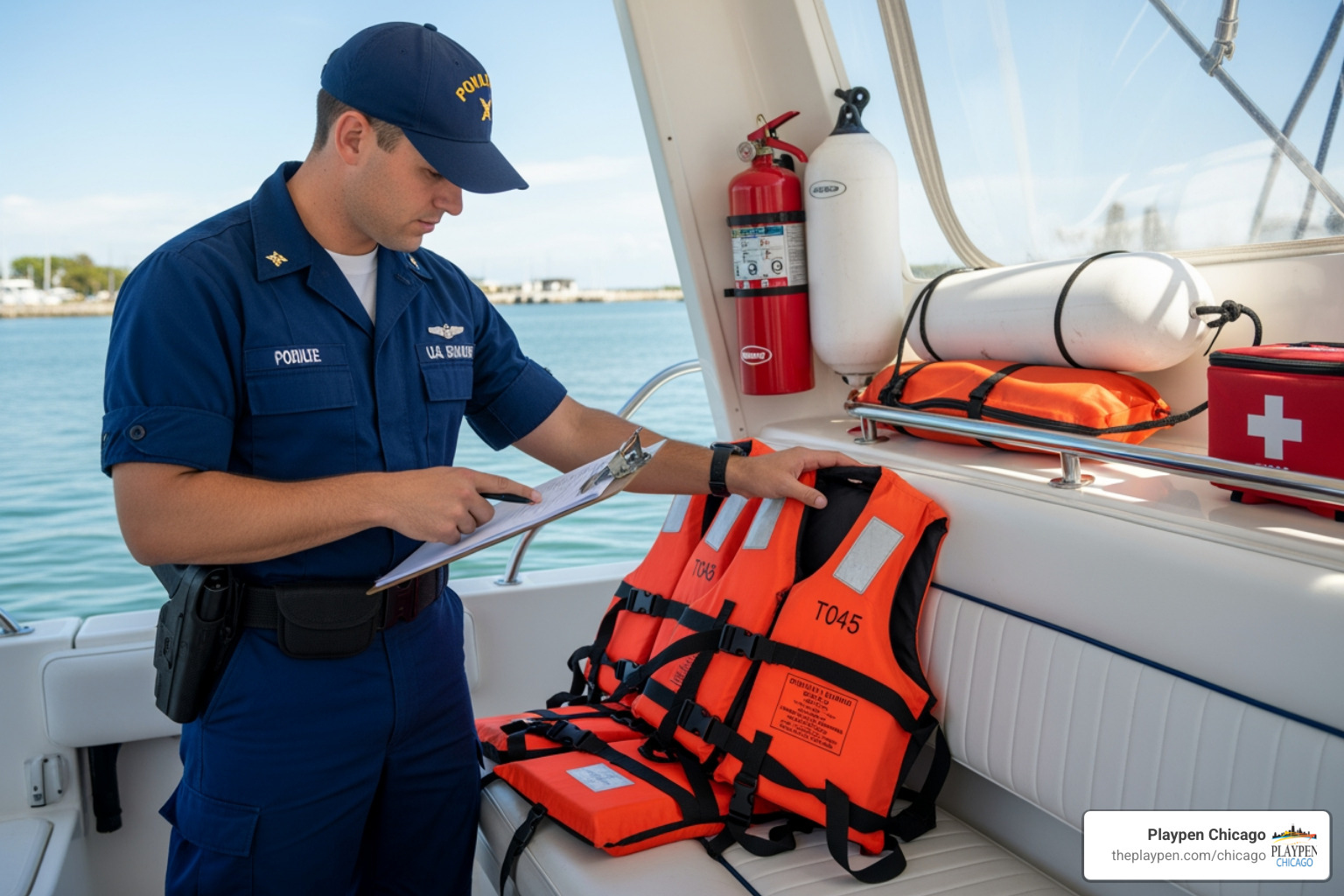
Uninspected Passenger Vessels (UPVs) are boats carrying six or fewer passengers. Despite the name, “uninspected” doesn’t mean you can skip safety measures. Your vessel still needs proper USCG-approved safety equipment including enough life jackets for everyone aboard, appropriate fire extinguishers, visual distress signals like flares, and sound-producing devices. The Coast Guard can board you at any time to verify compliance.
Once you cross that six-passenger threshold, everything changes. Inspected Vessels carrying seven or more passengers must undergo rigorous USCG safety inspections covering hull integrity, stability, electrical systems, fire suppression equipment, and emergency procedures. These boats must display a valid USCG Certificate of Inspection (COI) where passengers can see it. This inspection process is extensive and ongoing—it’s not a one-time event.
Beyond equipment and inspections, your vessel needs proper identification. Larger commercial vessels typically require federal vessel documentation through the Coast Guard, while smaller boats may operate under state registration. Understanding which applies to your situation is crucial, especially when operating in what the USCG defines as navigable waters—which definitely includes Lake Michigan. For the technical details on what qualifies as navigable waters, check the USCG definition of navigable waters.
The federal layer might seem daunting, but it exists for good reason. These requirements protect you, your passengers, and everyone else on the water. Once you’ve got your Coast Guard credentials and vessel requirements sorted, you’re ready to tackle the state and local permits that complete your charter operation’s legal foundation.
Navigating State and City of Chicago Charter Permit Requirements
After checking off the federal requirements, we’re not quite done yet. Operating a charter on Lake Michigan means we also need to satisfy Illinois state regulations and, if we’re working in Chicago’s waters, city ordinances too. Think of it as three keys to the same door—you need all of them to legally operate your charter business.
Understanding Illinois’s Charter Permit Requirements
The Illinois Department of Natural Resources (DNR) is your next stop on the charter permit requirements journey. The state wants to know about every commercial vessel operating on Illinois waters, and they have a few specific requirements to keep things organized and safe.
First up is the Passenger & Rental Boat License. If you’re carrying passengers for hire, this license is non-negotiable. The annual fee is $50 per boat, and you’ll need to renew it by March 1st every year. Mark that date on your calendar—letting it lapse can ground your operation faster than a sandbar.
Your vessel itself needs proper paperwork too. All watercraft with a motor or sail must be registered with the Illinois DNR. This isn’t a one-and-done deal—registration renews every three years. The fee varies based on your boat’s length, and you’ll need to complete a Watercraft Application. When you’re out on the water, keep your registration certificate, certificate of number, and certificate of title onboard. These documents are as essential as your life jackets. You can register your watercraft in Illinois online, and find the DNR boat license application on their website.
There’s one more wrinkle worth knowing about. If you were born on or after January 1, 1998, you’ll need a valid Boating Safety Certificate to operate any vessel with more than 10 horsepower. The DNR accepts several types of boating safety certificates, so check which one works best for you.
City of Chicago Specifics: The Commercial Passenger Vessel (CPV) License
Now we arrive at the city level, where Chicago adds its own layer to the charter permit requirements. The Department of Business Affairs and Consumer Protection (BACP) oversees commercial passenger operations within city limits through the Commercial Passenger Vessel License.
This CPV license is specifically designed for vessels offered for charter with captains. It’s Chicago’s way of ensuring that commercial operations in its harbors meet local standards for safety and professionalism. The city takes its waterfront seriously, and this license proves you’re part of the legitimate business community.
The annual fees are straightforward and based on your vessel’s capacity. If you’re carrying 19 passengers or fewer, you’ll pay $75 annually. Larger operations carrying 20 or more passengers pay $350 per year. These fees help the city maintain oversight and support the infrastructure that makes Chicago’s waterfront thrive.
Getting your CPV license means working directly with the BACP. The application process isn’t complicated, but it does require documentation showing you’ve met all the federal and state requirements we discussed earlier. You can get details on Chicago’s CPV license on the city’s website. For additional guidance specific to harbor operations, Chicago Harbors provides more information about local regulations and best practices.
Special Rules for Lake Michigan Sportfishing Charters
Running a sportfishing charter adds another dimension to your charter permit requirements. All the federal, state, and city requirements we’ve covered still apply—your foundation doesn’t change. But fishing charters come with their own set of considerations that go beyond simply carrying passengers.
The Illinois DNR works alongside federal fisheries management to regulate sportfishing on Lake Michigan. While most regulations focus on catch limits and seasons for recreational anglers, charter operators have additional responsibilities. You’re not just a captain—you’re also a data collector for conservation efforts.
Logbook reporting is a critical part of running a fishing charter. You’ll need to document the number of passengers aboard, the hours spent fishing, and detailed information about every fish caught—both the species and quantity. This might sound like paperwork for paperwork’s sake, but this data helps biologists manage fish populations and ensure Lake Michigan stays healthy for future generations. Think of it as your contribution to the ecosystem that supports your business.
Some highly migratory or federally managed species may require additional federal permits, particularly if you’re operating in federal waters. While these requirements are more common in ocean fisheries, it’s worth checking if any apply to your Lake Michigan operation.
For comprehensive guidance custom specifically to Lake Michigan charter fishing, the Illinois DNR provides information for Lake Michigan Charter Operators that covers everything from reporting requirements to seasonal regulations. Bookmark that page—it’s your go-to resource for staying compliant with fishing-specific rules.
The Business of Chartering: Insurance, Costs, and Operations
Operating a successful charter business on Lake Michigan involves more than just having the right licenses and a seaworthy vessel. It requires meticulous operational planning, understanding your financial obligations, and maintaining diligent record-keeping. These are the business best practices that underpin a compliant and profitable venture.
Securing the Right Commercial Marine Insurance
Perhaps one of the most critical charter permit requirements for any commercial operation is adequate insurance. Unlike personal boat insurance, which explicitly excludes commercial activities, chartering demands specialized commercial marine insurance. This isn’t just a suggestion; it’s a necessity, often required by permitting authorities.
We need to consider several types of coverage:
- Commercial General Liability: This covers bodily injury and property damage to third parties, including your passengers.
- Hull Insurance: This covers physical damage to your vessel.
- Protection and Indemnity (P&I) Coverage: This is a broad form of marine liability insurance that covers a wide range of third-party liabilities, including crew injury, cargo damage, and pollution.
- Passenger Liability: Specifically custom to cover liabilities arising from injuries or fatalities to passengers.
Why is personal insurance insufficient? Because as soon as you accept any form of compensation—monetary or in-kind—for carrying passengers, your personal policy becomes void. Operating commercially without commercial insurance leaves us completely exposed to potentially ruinous liability claims. For peace of mind and full compliance, we recommend reaching out to an expert to get a quote for charter insurance. Our research notes that commercial liability insurance should be at least $300,000, with a minimum of $15,000 per person based on the rated boat capacity, though specific needs may vary.
Tallying the Costs and Managing Renewals
Understanding the financial outlay for charter permit requirements is essential for business planning. While some costs are one-time, many are recurring. Here’s an estimated breakdown of annual costs for Chicago charter operators:
| Expense Category | Estimated Annual Cost |
|---|---|
| USCG Captain’s License Renewal | Varies by license type, usually every 5 years. Costs include medical exams, drug tests, and application fees (typically $100-$200). |
| Illinois Vessel Registration | Every 3 years. Fees depend on vessel length. E.g., $180 for 26-39 ft, $280 for 40-64 ft. |
| — | — |
| USCG Captain’s License Renewal | Varies by license type, usually every 5 years. Costs include medical exams, drug tests, and application fees (typically $100-$200). |
| Illinois Vessel Registration | Every 3 years. Fees depend on vessel length. E.g., $180 for 26-39 ft, $280 for 40-64 ft. |
| City of Chicago CPV License | Annual. $75 for 1-19 passengers or $350 for 20+ passengers. |
| Commercial Marine Insurance Premiums | Highly variable. Can range from a few thousand to tens of thousands annually, depending on vessel value, type of operation, and coverage limits. |
Beyond these, we’ll encounter various application fees, potential inspection fees (especially for larger vessels), and costs associated with maintaining safety equipment. The importance of timely renewal cannot be overstated. Missing a deadline can lead to lapses in coverage, operational stoppages, and even additional fees or reinstatement challenges. Set reminders and keep all your documentation carefully organized.
Logbooks, Manifests, and Reporting
Diligent record-keeping is a non-negotiable aspect of charter permit requirements. Federal and state authorities often mandate the maintenance of specific logs and reports to ensure accountability and aid in resource management.
- Passenger Manifests: For every charter trip, we must maintain an accurate passenger manifest. This document lists all individuals on board, their contact information, and sometimes emergency contacts. It’s a critical safety tool, especially in emergencies, allowing authorities to quickly account for everyone.
- Trip Logs: Many agencies, including the DNR for fishing charters, require detailed trip logs. These typically record the number of persons carried, hours of operation, and, for fishing, the species and quantity of fish caught. While specific to South Carolina, our research highlights that “charter fishing vessels must maintain a log of the number of persons carried each trip, number of hours engaged in fishing, number of fish by species caught each day, and other information deemed necessary by the Department.” This principle of detailed logging applies broadly.
- Electronic Reporting Systems: Some federal fisheries programs, particularly in other regions, use electronic reporting systems. While not explicitly detailed for Lake Michigan, staying abreast of technological advancements in reporting can streamline compliance.
Consequences and Best Practices for Charter Operators
Understanding charter permit requirements isn’t just about ticking boxes; it’s about protecting our business, our passengers, and ourselves. Ignoring these regulations can lead to severe consequences, while adherence builds a reputation for safety and professionalism.
The Risks of Operating Without a Valid Charter Permit
As we mentioned in the introduction, the stakes are high. Operating without valid charter permit requirements can lead to:
- Hefty Fines: Even small violations can accrue significant financial penalties. For instance, some jurisdictions impose fines starting at $50 per offense.
- Vessel Seizure: In serious cases of non-compliance, authorities have the power to seize your vessel, putting an immediate halt to your operations and incurring additional costs for recovery.
- License Suspension/Revocation: Your USCG Captain’s License, as well as state and city permits, can be suspended or permanently revoked, effectively ending your ability to operate commercially.
- Invalidated Insurance: This is perhaps the most terrifying consequence. Without proper commercial licensing, your insurance policy becomes null and void. Any accident, injury, or damage could leave you personally liable for millions of dollars, potentially bankrupting you.
- Misdemeanor Charges: Operating an illegal charter can lead to criminal misdemeanor charges, impacting your personal and professional record.
The message is clear: compliance isn’t just a formality; it’s a shield against devastating repercussions.
A 7-Step Checklist for Aspiring Chicago Charter Operators
To help us steer the complex world of charter permit requirements, we’ve put together a concise checklist for aspiring Chicago charter operators:
- Obtain the correct USCG Captain’s License. Determine whether you need an OUPV (6-Pack) or Master’s license based on your passenger count and complete the necessary sea time, exams, and physicals.
- Register your vessel with the Illinois DNR. Ensure your watercraft is properly registered and titled with the state, and carry all documentation onboard.
- Secure commercial marine insurance. Do not operate for hire with personal insurance. Obtain comprehensive commercial liability, hull, and P&I coverage.
- Apply for the IL DNR Passenger Vessel License. This is your state-level permit for carrying passengers for hire on Illinois waters.
- Apply for the City of Chicago CPV License. This city permit is essential for commercial operations within Chicago’s harbors and waterways.
- Complete all required vessel safety checks. For vessels carrying more than six passengers, this means a full USCG inspection. For all vessels, ensure federal safety equipment requirements are met.
- Establish a system for logbooks and passenger manifests. Diligently record all required trip information and passenger details for safety and regulatory compliance.
Frequently Asked Questions about Chicago Charter Permits
It’s completely normal to have questions when you’re diving into charter permit requirements on Lake Michigan! We get it – there’s a lot to learn. Let’s clear up some of the most common questions we hear, especially concerning operations in and around Chicago.
What’s the difference between a bareboat charter and a captained charter?
This is a really important distinction, and understanding it is key to figuring out your specific charter permit requirements.
Imagine a bareboat charter like renting a car. You get the vessel, but no crew comes with it. You, as the person renting, become the operator and are fully responsible for how the boat is used, its safety, and finding a qualified captain if you need one. However, it’s worth noting that Chicago Harbors has recently tightened up on these. They “will no longer grant Bareboat or 6 Passenger Permits due to changes in US Coast Guard guidance,” which means this model is becoming more restricted, especially if it blurs the line into a “for-hire” service without proper licensing. If someone rents a boat and then uses an unqualified captain, or if the “bareboat” is actually a disguised captained charter, it could be considered an illegal operation.
On the flip side, a captained charter is where the vessel owner or operator provides the captain (and sometimes even a crew). This is the standard setup for most commercial boat trips. When you book a captained charter, the captain is part of the service you’re paying for. All the charter permit requirements we’ve talked about – like the USCG license (including the “six-pack” rule for up to six passengers), the Illinois DNR license, the City of Chicago CPV license, and commercial insurance – apply directly to the vessel owner and the captain they provide.
Do I need a permit to take friends out if they chip in for gas?
This is a super common question, and it’s a bit of a tricky area! The U.S. Coast Guard (USCG) has a very strict view on what counts as “for-hire” or “commercial” activity.
If your friends “chip in for gas,” or contribute money for food, drinks, or anything else of value for the trip, the USCG might see this as a commercial operation. The moment there’s any form of “consideration” (meaning something of value is exchanged), even if it’s just to cover your costs, your trip can be considered commercial.
If your trip is deemed commercial, then suddenly all those charter permit requirements kick in! This means you’d need a USCG Captain’s License, commercial marine insurance, and potentially state and city permits. Our best advice? If you’re genuinely just taking friends out and they’re sharing expenses without any expectation of a “service,” make sure it’s clear it’s a friendly outing, not a commercial one. But if there’s any doubt, or if you find yourself regularly taking people out where money changes hands, it’s simply not worth the risk to operate without the proper permits. Get licensed, get insured, and enjoy peace of mind!
Are there special rules for operating in the “Playpen” area of Lake Michigan?
Absolutely! The “Playpen” is a fantastic and popular spot on Lake Michigan, just north of Navy Pier, where boaters love to gather. Because it’s such a lively area, it definitely has its own set of guidelines, both official and unspoken, to keep everyone safe and happy.
While there aren’t specific permits just for the Playpen itself, all the general charter permit requirements for operating in Chicago and on Lake Michigan still apply. So, you’ll need your USCG license, DNR permits, and Chicago CPV license to operate a commercial charter there.
When you’re in the Playpen, you’ll need to be extra mindful of:
- No-Wake Zones: As you approach and move within the Playpen area, you’ll encounter designated no-wake zones. This means you must operate your vessel at the slowest speed possible to maintain control, creating as little wake as you can. It’s all about safety and respect for other boaters.
- Rafting Up Rules: Tying boats together, or “rafting up,” is a big part of the Playpen experience. However, there are often local guidelines or even unwritten rules about how many boats can raft together, how much space they take up, and making sure navigation channels stay clear for others.
- Local Ordinances and Etiquette: Beyond the formal rules, common sense, courtesy, and responsible boating are super important here. This includes always disposing of waste properly, being considerate with noise levels, and staying aware of the many vessels around you.
For operators who have all their charter permit requirements in order, the Playpen Chicago platform is a fantastic way to connect with folks who are eager for amazing on-water experiences in this iconic location. It helps you find clients who truly value safe, professional, and compliant operations.
Conclusion: Set Sail for Success in Chicago’s Charter Scene
Navigating the waters of charter permit requirements for Lake Michigan operations might feel a bit like charting a new course at first. But don’t worry, it’s totally manageable! We’ve sailed through the federal, state, and city rules together, and now you have a clear map for running your charter legally, safely, and with confidence.
Think of each permit and license – your USCG Captain’s License, that crucial commercial insurance, your vessel’s registration, and all those city and state permits – as building blocks. They’re not just checkboxes; they’re smart investments in your business’s future. They clearly show your passengers you’re serious about their safety and your professionalism, helping you build a fantastic reputation in Chicago’s busy boating scene.
Beyond simply avoiding fines and trouble, being fully compliant brings incredible peace of mind. It means you’re contributing to a wonderful, responsible community on Lake Michigan. And for operators who do things the right way, there’s an amazing opportunity waiting to connect with eager customers.
That’s where Playpen Chicago comes in! Our platform is the perfect spot for legally-compliant operators like you. We’ve built a premier marketplace where you can easily connect with a community that’s absolutely eager for unforgettable on-water experiences. Imagine reaching a wide audience ready to book your amazing charters!
So, if you’re ready to showcase your compliant, professional service and truly thrive in Chicago’s vibrant charter scene, we warmly invite you. Come join the community and list your charter service with us. Let’s set sail for success, together!