
Chicago’s Cold Snap: Protecting Your Boat with Proper Winterization and Storage
Why Winterizing Your Boat Matters in Chicago’s Harsh Climate
Winterizing a boat in Chicago is not optional—protect your vessel from catastrophic freeze damage. Here’s what you need to know:
Essential Winterizing Steps for Chicago Boaters:
- Drain or protect all water systems with propylene glycol antifreeze rated for temperatures well below freezing
- Winterize your engine by changing oil, adding fuel stabilizer, and running antifreeze through cooling systems
- Choose your storage before the September 15th deadline for early bird pricing at Chicago harbors
- Protect your investment with proper shrink wrapping or custom covers that allow ventilation
- Care for batteries by removing them for indoor storage with trickle charging
Timeline: Start planning in September, complete winterization before November haul-out, and expect to launch again in April.
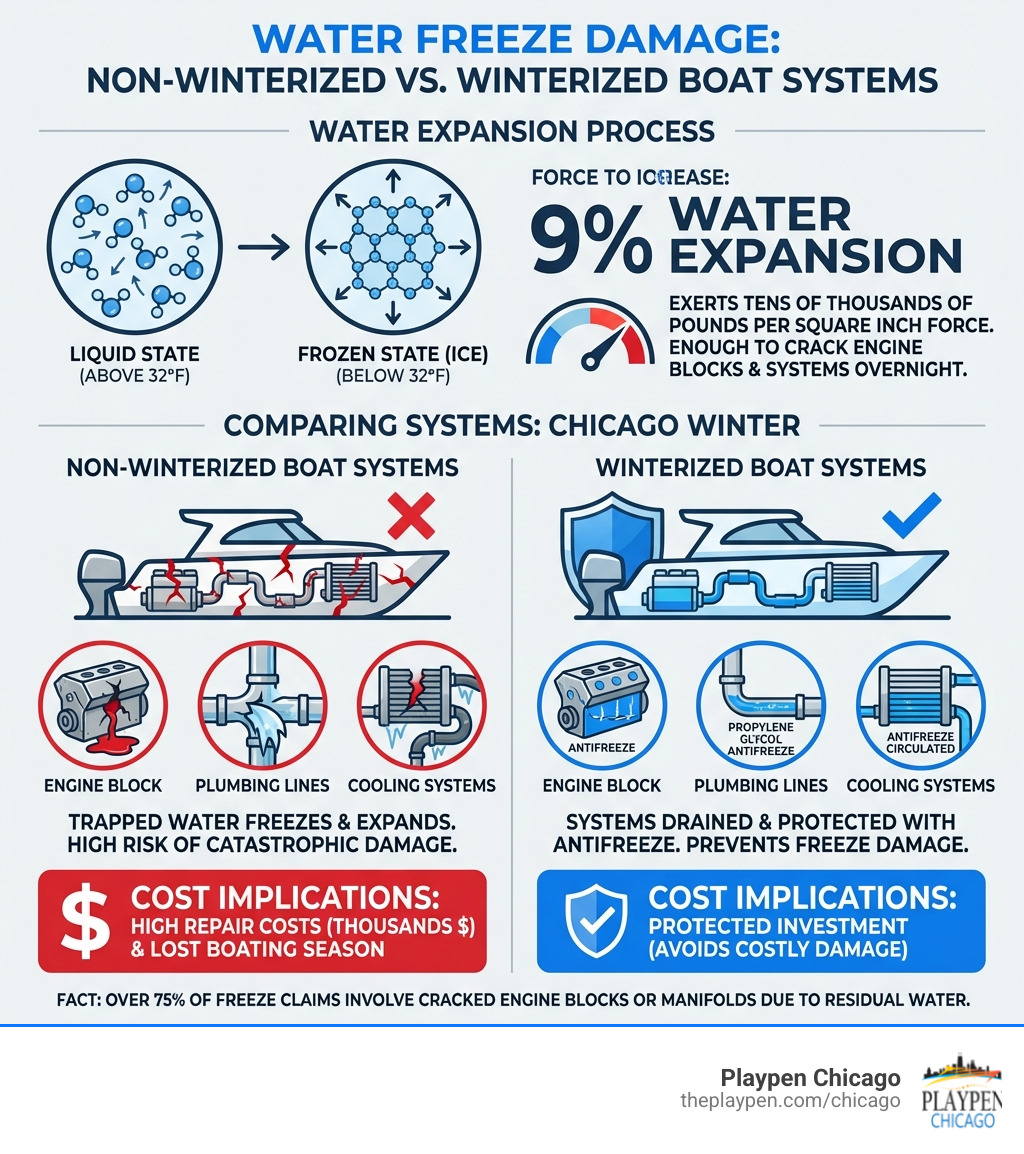
Water expands by 9% when it freezes. That may not sound like much, but it exerts tens of thousands of pounds per square inch of force—enough to crack engine blocks, split hoses, and destroy plumbing systems overnight.
More than three-quarters of freeze claims handled by marine insurers involve cracked engine blocks or exhaust manifolds because water remained in the system during a hard freeze. The repair costs can run into thousands of dollars, and you’ll lose precious weeks of the next boating season while your engine gets rebuilt or replaced.
Chicago’s winter temperatures regularly drop well below freezing, with bitter cold snaps that can plunge into the single digits or below zero. Lake Michigan’s harsh conditions make proper winterization absolutely critical for every boat owner, whether you’re storing at 31st Street Harbor, Montrose Harbor, or any other Chicago location.
Even boats stored in heated indoor facilities need winterization. As one Chicago marina finded, customers who thought heated storage meant they could skip winterization came in for spring inspections only to find cracked engine blocks. Heaters fail, power goes out during ice storms, and one cold night is all it takes to cause permanent damage.
I’m Heidi Auvenshine, Partnership and Marketing Director for Playpen Chicago, and I’ve spent years working with boat owners navigating Chicago’s waterfront scene and helping them protect their vessels through proper winterizing a boat in Chicago practices. Through partnerships with local marinas and charter operators, I’ve seen what happens when winterization is done right—and when it’s neglected.
Why Winterizing a Boat in Chicago is Non-Negotiable
Chicago winters are no joke. The biting winds off Lake Michigan and the consistently sub-freezing temperatures create a hostile environment for any vessel left unprepared. That’s why winterizing a boat in Chicago isn’t just a recommendation; it’s a critical act of preservation. Neglecting this crucial step can lead to devastating and costly damage, turning your beloved boat into a very expensive repair project.
The primary culprit behind winter damage is water. As our introduction highlights, water expands by about 9% when it freezes. This expansion isn’t gentle; it exerts immense force-tens of thousands of pounds per square inch-which is more than enough to rupture even robust materials. Our research shows that more than three-quarters of freeze claims involve cracks in the engine block or exhaust manifolds. Imagine the heartbreak of finding a “chocolate milk” on your dipstick or brown froth spewing from a crack in your engine block come spring. That’s a clear sign of severe freeze damage.
Even if your boat is stored indoors, or you’re tempted to rely on electric heaters, the risks remain high. Power outages frequently occur during the worst winter weather, leaving your boat vulnerable just when it needs protection most. Plus, heaters can pose fire hazards and contribute to mold and mildew due to condensation. As experts in Chicago’s boating scene, we’ve seen countless instances where boat owners, even those with indoor storage, faced cracked engine blocks because they assumed a heated environment negated the need for proper winterization. The truth is, boats don’t need to freeze to sustain damage if water is present in critical systems.
If you’d like a quick refresher on why freeze damage happens, see this overview of the freezing process for details on water’s expansion behavior.
For more information on keeping your vessel safe, check out our More info about boat safety guide.
The High Cost of Neglect
The potential costs of not properly winterizing a boat in Chicago extend far beyond a simple repair bill. Freeze damage can lead to:
- Engine replacement: A cracked engine block often means a complete engine overhaul or replacement, which can easily run into thousands of dollars and sometimes even tens of thousands, depending on the engine type and size.
- Split hoses and plumbing: Frozen water can burst freshwater lines, marine heads, and bilge pump hoses, leading to leaks and extensive water damage inside your boat.
- Hull distortion: Improper support during storage, combined with freezing conditions, can stress and distort the hull, especially for boats left in the water.
- Lost boating time: Beyond the financial burden, repairing freeze damage can take weeks or even months. This means you could lose a significant portion of the precious Chicago boating season waiting for your boat to be seaworthy again. Our goal at Playpen Chicago is to get you on the water, not waiting on repairs.
Proper winterization is an investment in your boat’s longevity and your peace of mind. It ensures that when spring arrives, your vessel is ready for new adventures on Lake Michigan, rather than being stuck in the repair yard. Understanding More info about Chicago boating laws and safety can also help you steer other important aspects of boat ownership in our city.
The Best Time and Storage Options for Chicago Boaters
Timing is everything when it comes to winterizing a boat in Chicago. The key is to act before the first hard freeze, which can often sneak up on us in late October or early November. Our local Chicago Harbors, like 31st Street and Montrose, typically schedule haul-outs in November and aim for launches in April. However, the real deadline to keep in mind is usually September 15th. This is often the cutoff for early bird pricing on winter storage, which can offer significant savings.
Boats stored ashore, out of the water, are more susceptible to freezing temperatures than those in the water, as the ground and air temperatures will affect them sooner. Therefore, if you plan for outdoor storage, we recommend completing winterization earlier rather than later.
When considering where your vessel will spend the chilly months, Chicago offers several storage options, each with its own benefits and considerations.

| Storage Option | Description A beautiful winter boat can be a beautiful sight, but the damage from a single Chicago cold snap can be devastating. Proper winterization is crucial for preserving your investment and ensuring a smooth start to the next boating season on Lake Michigan.
The Best Time and Storage Options for Chicago Boaters
Timing is everything when it comes to winterizing a boat in Chicago. We recommend getting a head start before the mercury consistently dips below freezing. Our local Chicago Harbors typically schedule haul-outs in November, with launches resuming in April. However, the critical date to remember for your wallet is September 15th, which is usually the deadline for early bird pricing on winter storage. Missing this can mean higher costs, so mark your calendars!
For boats stored ashore, out of the water, winterization should be completed earlier, as they’re more exposed to plummeting air temperatures compared to vessels nestled in the relatively warmer lake waters.
Chicago offers diverse storage solutions custom to different needs and budgets:
Choosing Your Harbor: 31st Street vs. Montrose
The Chicago Harbors are proud to offer winter storage services at two prime locations: 31st Street Harbor and Montrose Harbor. Both provide excellent facilities for powerboats and sailboats up to 40 feet, with 24-hour staff on site for security and assistance.
- 31st Street Harbor: This location is our most modern marina and offers both outdoor and indoor heated storage options. It provides winter access to indoor storage, which is a significant plus for owners who like to tinker or check on their boats throughout the colder months. Early bird outdoor storage is priced at $7.25/sq. foot (by Sept. 15th), while indoor heated storage starts at $12.50/sq. foot (by Sept. 15th), increasing to $13.50/sq. foot after the deadline.
- Montrose Harbor: While Montrose offers outdoor storage only, it provides flexible haul-out and launching options. This can be ideal for those who want a bit more control over their winter schedule. Outdoor storage at Montrose is more budget-friendly, starting at $5.75/sq. foot (by Sept. 15th) and rising to $6.75/sq. foot after the deadline.
Both harbors also offer shrink-wrapping services, an additional layer of protection, priced at $2.25/sq. foot (by Sept. 15th) and $3.25/sq. foot after. We encourage you to plan ahead and secure your spot early, as demand is high! For more insights into local conditions, check out our More info about Lake Michigan boating forecast.
Indoor Heated vs. Outdoor Storage
The choice between indoor heated and outdoor storage significantly impacts your winterizing a boat in Chicago strategy.
- Indoor Heated Storage: This is the Cadillac of winter storage, offering climate control and often backup generators. While ideal, it doesn’t eliminate the need for engine winterization. As we’ve seen, power outages can still leave systems vulnerable. However, it significantly reduces concerns about hull damage from ice and snow buildup and offers a more consistent environment, protecting your boat’s exterior and interior from the elements.
- Outdoor Storage: A more common and often more affordable option, outdoor storage requires robust preparation. Your boat will be exposed to the full brunt of Chicago’s winter, including snow, ice, and extreme cold. Shrink-wrapping is highly recommended for outdoor storage. While effective, shrink-wrapping needs proper ventilation to prevent moisture buildup and mildew. A well-supported custom cover with a frame that allows for air circulation and prevents pooling of snow and ice is another excellent option. Be wary of using simple tarps, as they can shred in high winds and deposit snow and ice directly into your boat.
Regardless of your choice, proper support for your vessel is paramount. If storing ashore, custom-made cradles offer the best support. If using jackstands, ensure a detailed blocking plan is followed, with plywood bases and safety chains, especially for boats over 26 feet, which should have at least three jackstands per side. This prevents hull distortion and ensures stability throughout the winter.
For details on where to find these services and more, explore Winterization services in Chicago.
Step-by-Step Guide to Winterizing a Boat in Chicago
Whether you’re a seasoned DIY enthusiast or just curious about the process, understanding the key steps to winterizing a boat in Chicago is invaluable. This process protects your investment and ensures a smooth start to the next boating season. While a professional service offers peace of mind, many boat owners confidently tackle parts of the winterization process themselves.
The general idea is to remove all water from systems that could freeze and replace it with appropriate antifreeze, or otherwise protect components from the harsh winter elements. This also serves as an excellent time for routine maintenance.
For comprehensive DIY tips, you can often find guides like Winterization DIY tips (though we always recommend consulting your owner’s manual for specific instructions for your vessel).
Winterizing a Boat in Chicago: Engine and Fuel Systems
The engine is the heart of your boat, and it’s also one of the most vulnerable components to freeze damage. Proper engine and fuel system winterization is non-negotiable.
- Fuel Stabilization: This is your first step. Add a high-quality fuel stabilizer to your gasoline tank(s) and run the engine for about 10-15 minutes to ensure the treated fuel circulates throughout the fuel system. This prevents phase separation and fuel breakdown during storage, which can lead to costly spring repairs. We recommend filling your tank to about 95% capacity to minimize condensation.
- Oil and Filter Change: Change your engine oil and filter. Old oil can contain corrosive acids and contaminants that can damage internal engine components during long periods of inactivity. Fresh oil provides better protection.
- Engine Flushing and Antifreeze:
- Raw-Water Cooled Engines: These engines draw raw Lake Michigan water directly for cooling. You’ll need to flush the system with fresh water and then circulate non-toxic propylene glycol antifreeze through it. This involves using a winterizing kit or a flush muff and a bucket to feed the antifreeze into the raw water intake until it exits the exhaust. The antifreeze should contain rust inhibitors to protect internal engine surfaces.
- Freshwater-Cooled Engines: These have a closed cooling system (like a car) that uses coolant, and a raw-water side that cools the coolant. You’ll need to check the coolant’s freeze protection level and ensure it’s adequate for Chicago’s brutal cold. The raw-water side still needs to be flushed and then filled with propylene glycol antifreeze.
- Fogging Cylinders (Gasoline Engines): After changing the oil and circulating antifreeze, spray fogging oil into the carburetors or air intake while the engine is running to coat the internal cylinder walls. This prevents rust and corrosion during storage.
- Sterndrives and Outboards:
- Sterndrives: Flush with fresh water, drain the gear case, and refill with fresh, appropriate gear lubricant. Inspect the propeller for damage and consider removing it. Store the drive in the down position to allow for proper drainage.
- Outboards: Flush thoroughly with fresh water, drain the gear case and refill with fresh lubricant. Fog the cylinders, and store the outboard in the down position to allow all water to drain out.
A little effort now saves a lot of headaches (and money) later. For those new to boating in Chicago, our More info about beginner boating in Chicago can help you get started on the right foot.
Winterizing a Boat in Chicago: Plumbing and Batteries
Beyond the engine, your boat’s plumbing and electrical systems also need careful attention to withstand the deep freeze.
- Freshwater System: This includes sinks, showers, toilets, and any potable water tanks.
- Drain all water: Completely drain your freshwater tank and open all faucets (hot and cold), showerheads, and seacocks. Run the water pump dry for a few seconds to clear residual water.
- Bypass Water Heater: If you have a water heater, bypass it by rerouting the plumbing, and then drain it completely. You don’t want to fill your water heater with expensive antifreeze!
- Circulate Antifreeze: Once drained, introduce non-toxic propylene glycol antifreeze into the system. You can do this by pouring it into the freshwater tank or by using a winterizing kit that connects to your water pump. Turn on each faucet, shower, and toilet flush until you see pink antifreeze flowing out, ensuring all lines are protected.
- Marine Heads (Toilets): Flush the toilet, then pump non-toxic antifreeze through the bowl until it cycles through and you see pink antifreeze in the discharge. For systems with holding tanks, ensure the tanks are pumped out and flushed before winterization.
- Air Conditioning and Other Systems: If your boat has air conditioning, ensure its raw water intake and discharge lines are drained and filled with propylene glycol antifreeze. Similarly, run antifreeze through bilge pumps, live-wells, and deck wash-down pumps to protect them.
- Batteries: Proper battery care is crucial for longevity.
- Remove and Clean: Disconnect and remove your batteries from the boat. Clean the terminals thoroughly.
- Check Electrolyte Levels: For lead-acid batteries, check and top off electrolyte levels with distilled water.
- Store and Charge: Store batteries in a cool, dry place indoors, away from freezing temperatures. Connect them to a marine-specific “smart charger” or trickle charger that has a float setting. This maintains a full charge without overcharging, preventing sulfation and extending battery life. Avoid using automotive trickle chargers, as they may not be suitable for marine batteries.
Safety is paramount in all aspects of boating, including winterization. Our More info about the boat safety key provides additional tips for keeping your vessel secure.
Professional Services vs. DIY: Costs and Considerations
Deciding whether to hire a professional or tackle winterizing a boat in Chicago yourself often boils down to time, expertise, and budget. While many tasks are manageable for the handy boat owner, professional services offer significant benefits, especially given Chicago’s harsh climate.
The DIY Approach:
Pros: Cost-effective (you only pay for materials), provides a deeper understanding of your boat’s systems, and you can work on your own schedule (to a point!). Cons: Requires specific tools, knowledge, and a significant time commitment (winterizing most boats can take from an hour to a full day). Mistakes can be incredibly costly, leading to freeze damage that far outweighs any savings.
Professional Services:
Pros: Peace of mind, expertise from certified technicians (some marine service providers are ABYC Certified), saves you time and effort, and often includes a warranty on their work. Professionals understand the nuances of various boat types and systems, ensuring everything is done correctly. They also know what specific antifreeze to use for Chicago’s extreme cold. Cons: Higher upfront cost. However, this cost is often a small fraction of what you’d pay for freeze damage repairs if something goes wrong with a DIY job. When choosing a professional, always get a written contract detailing exactly what services are included. Our research shows that ‘winterizing’ lacks a universal definition, so a clear contract prevents disputes and ensures your boat is adequately protected.
You can find reputable boat winterization services in the Chicago area through directories like Chicago Boat Winterization directory.
Typical Chicago Winterization Costs
The cost of professional winterizing a boat in Chicago varies depending on the size of your boat, the complexity of its systems, and the specific services you require. Here’s a general idea of what you might expect for labor costs, based on local marina quotes (remember, parts and antifreeze are often extra):
- Winterize Engine (Gasoline): Approximately $200
- Winterize Generator (Gasoline): Approximately $150
- Winterize Stern Drive: Approximately $150
- Winterize Fresh Water System: Approximately $105
- Winterize Ice Maker: Approximately $95
- Winterize Waste Head: Approximately $60
- Winterize Shower Sump Pump: Approximately $40
- Winterize Live-Well Pump: Approximately $40
- Winterize Deck/Bilge Wash-Down Pump: Approximately $55
- Shrink Wrap Services: Ranging from $22-$29 per foot, depending on boat size and specific requirements. Early bird rates apply!
- Inside Boat Storage: Around $14.25 per foot (this can vary by harbor and early bird discounts).
- Outside Boat Storage: Around $4.00 per foot (again, check for harbor-specific pricing and early bird deals).
These figures give you a good starting point for budgeting. Always request a detailed quote that specifies what’s included and what’s extra, especially for antifreeze and parts.
Frequently Asked Questions about Chicago Boat Winterization
We get a lot of questions about how to best prepare boats for Chicago’s winter. Here are some of the most common ones:
What is the best antifreeze to use for Chicago winters?
For your boat’s freshwater systems and plumbing, we strongly recommend using non-toxic propylene glycol antifreeze. This type of antifreeze is safe for drinking water lines and is designed to protect against freezing without harmful chemicals. It’s crucial to distinguish this from ethylene glycol, which is highly toxic (used in car engine coolants) and should never be used in potable water systems.
When selecting propylene glycol antifreeze, pay close attention to its freeze rating. While a product might be labeled “-50°F,” this often refers to its burst protection rating for rigid pipes, not its freezing point. It typically starts to freeze at around 15°F, becoming slushy but not expanding enough to cause damage until much colder temperatures. For Chicago’s extreme cold, we advise using antifreeze rated well below the lowest expected temperatures and always using it at full strength (do not dilute it) to ensure maximum protection. Many marine-grade propylene glycol antifreezes also contain rust inhibitors, offering dual protection for your plumbing systems.
When is the best time to start the winterization process?
The best time to start the winterizing a boat in Chicago process is in early fall, ideally by late September or early October. This gives you ample time before the first hard freeze, which can occur sooner than you think.
Our local Chicago Harbors emphasize the importance of acting early, with September 15th often being the deadline for early bird discounts on winter storage. While haul-outs are typically scheduled for November, completing your winterization tasks before this date ensures your boat is protected even if an unexpected cold snap hits while it’s still in the water or awaiting haul-out. If you won’t be using your boat for a month or more, regardless of the calendar, it’s a good practice to begin winterizing.
How should I care for my boat batteries during storage?
Proper battery care is essential to ensure they’re ready to go come spring. Here’s how we recommend handling them:
- Remove Batteries: Disconnect and remove all batteries from your boat.
- Clean Terminals: Thoroughly clean the battery terminals and posts. Apply a thin coat of dielectric grease or a battery terminal protector to prevent corrosion.
- Check Electrolyte Levels: For lead-acid batteries, check the electrolyte levels in each cell and top them off with distilled water if needed.
- Store Indoors: Store your batteries in a cool, dry, and well-ventilated area indoors. This prevents them from freezing, which can cause internal damage.
- Trickle Charge: Connect your batteries to a marine-specific “smart charger” that has a float mode or a multi-stage charging cycle. This type of charger will maintain a full charge without overcharging, preventing sulfation (a common cause of battery failure in storage) and extending battery life. Avoid using basic automotive trickle chargers that might not regulate voltage properly. Check on them periodically throughout the winter.
Following these steps will help ensure your batteries are fully charged and ready to power your adventures on Lake Michigan next season.
Conclusion
As the vibrant Chicago boating season winds down, the responsibility of winterizing a boat in Chicago becomes paramount. It’s more than just a chore; it’s a critical investment in your vessel’s longevity and your future enjoyment on Lake Michigan. From protecting your engine from the devastating 9% expansion of freezing water to ensuring your plumbing and electrical systems are secure, every step contributes to safeguarding your passion.
Whether you opt for the hands-on DIY approach or entrust your boat to the skilled professionals at one of Chicago’s reputable marinas, planning ahead is key. Remember those crucial deadlines for early bird storage, and always prioritize the right materials, like non-toxic propylene glycol antifreeze, for your boat’s specific needs.
By diligently following these guidelines, you’re not just preparing your boat for winter; you’re setting the stage for a seamless transition back to the water come spring. When the warmer weather returns, you’ll be among the first to hit the waves, ready to create new memories and reconnect with the vibrant Chicago boating community.
At Playpen Chicago, we’re here to help you make the most of every boating season, year-round. From safety tips to connecting you with local services, we’re your go-to resource for all things boating in Chicago.
Ready to dream about next season’s adventures? Explore the Chicago Boat Show and start planning your return to the water!