Boat Safety is essential for everyone on the water—from first-time renters to experienced captains. Here’s what you need to know:
In calendar year 2024, the Coast Guard verified 3,887 incidents that involved 556 deaths, 2,170 injuries, and approximately $88 million of damage to property as a result of recreational boating incidents. Drowning is the number one cause of boating fatalities, and most of these tragedies occur on calm inland waters within feet of safety.
The good news? Most boating accidents are preventable through proper preparation, equipment, and responsible operation.
Whether you’re planning to rent a yacht for a Playpen party, charter a boat for a sunset cruise, or join friends on their vessel, understanding boat safety rules protects you and everyone around you. This guide covers everything from required safety equipment to navigation rules, emergency procedures, and best practices for staying safe on Chicago’s waterfront.
I’m Heidi Auvenshine, Partnership and Marketing Director for Playpen Chicago, and I’ve worked extensively with boat operators, charter companies, and event organizers to promote safe and enjoyable experiences on Lake Michigan. Throughout my career connecting boaters with premium on-the-water experiences, I’ve seen how Boat Safety knowledge transforms anxiety into confidence and makes every outing more enjoyable.
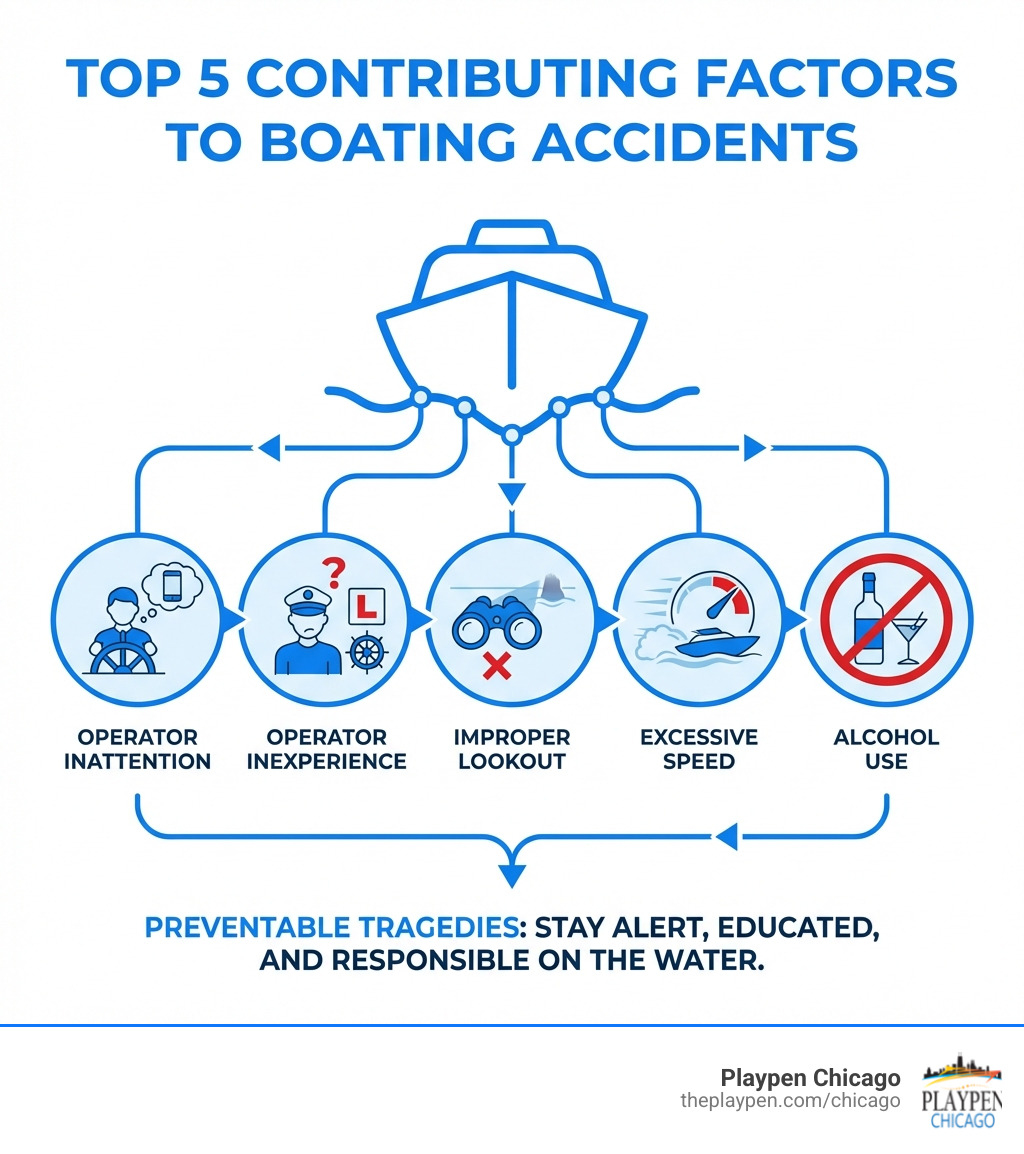
Before casting off from a Chicago harbor, it’s crucial to understand the safety equipment mandated by the U.S. Coast Guard (USCG). These are legal requirements, not suggestions, designed to keep everyone safe. The specific items needed vary by vessel size and type.
This overview covers USCG minimums for recreational vessels. State or local rules may add requirements. For full details, always check the official United States Coast Guard | Boating Safety website.
| Vessel Size (Length Overall) | Personal Flotation Devices (PFDs) | Fire Extinguishers | Visual Distress Signals (VDS) (Coastal Waters) | Sound-Producing Devices | Navigation Lights |
|---|---|---|---|---|---|
| Less than 16 ft (Class A) | 1 wearable PFD per person | 1 B-I (motorized) | Not required | Whistle/horn (efficient sound) | Required |
| 16 ft to 26 ft (Class 1) | 1 wearable PFD per person + 1 throwable | 1 B-I (motorized) | Day & Night (3 each) | Whistle/horn (efficient sound) | Required |
| 26 ft to <40 ft (Class 2) | 1 wearable PFD per person + 1 throwable | 2 B-I OR 1 B-II | Day & Night (3 each) | Whistle/horn (efficient sound) | Required |
| 40 ft to <65 ft (Class 3) | 1 wearable PFD per person + 1 throwable | 3 B-I OR 1 B-II & 1 B-I | Day & Night (3 each) | Whistle/horn (efficient sound) | Required |
Note: This table provides a simplified overview. Specific requirements for ventilation, backfire flame arrestors, and pollution placards also apply based on vessel type, engine, and construction date.
Recreational vessels with engines must be registered in their state of principal use (Illinois for Chicago). Larger vessels may undergo federal documentation but are not exempt from state taxes or equipment rules.
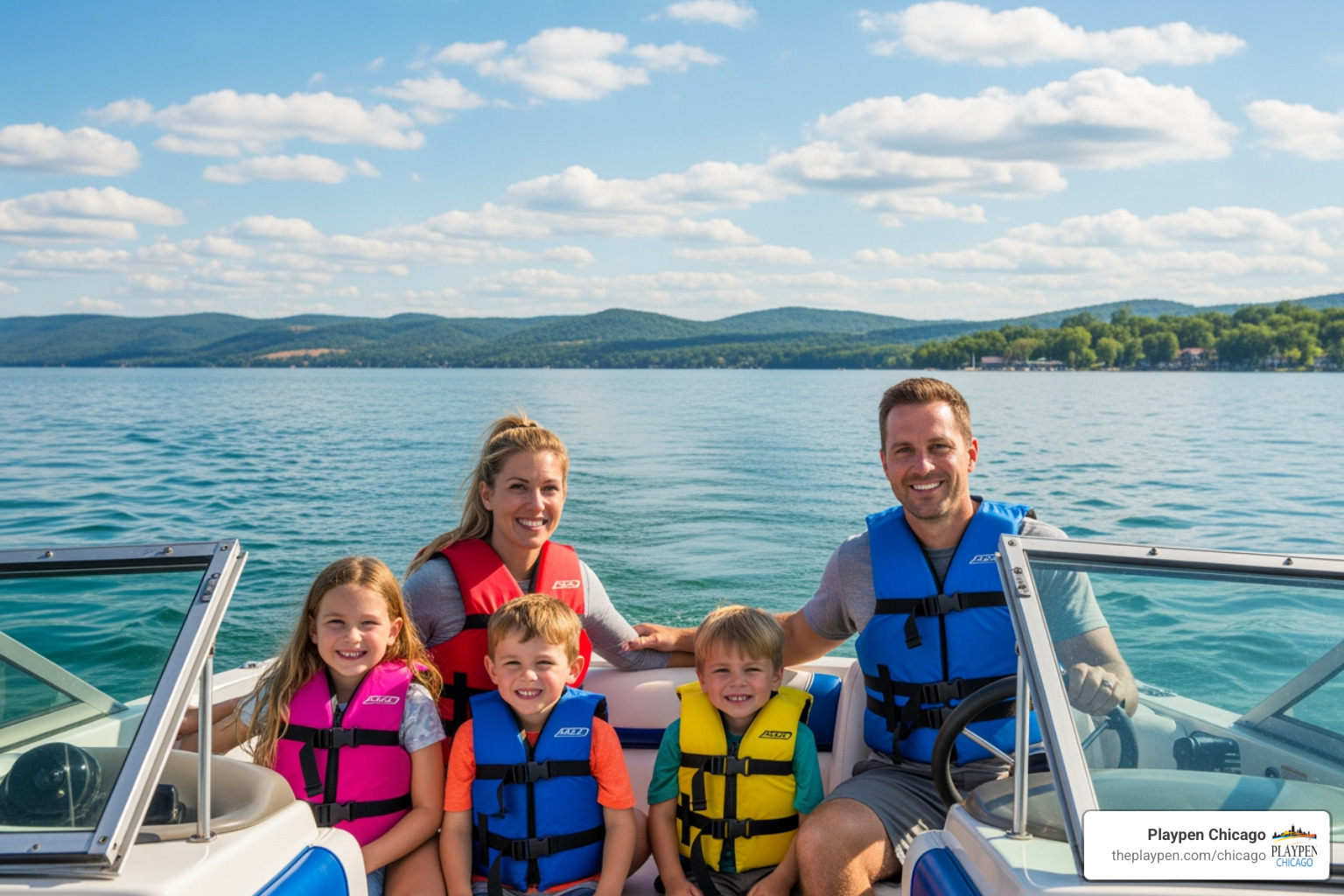
Personal Flotation Devices (PFDs), or life jackets, are the most critical safety equipment. Since 85% of drowning victims in fatal boating accidents weren’t wearing a life jacket, complying with PFD regulations is paramount for Boat Safety.
The USCG categorizes PFDs into different types (historically Type I, II, III, IV, V, though federal regulations now often use “wearable” and “throwable” PFDs).
Requirements by Age and Vessel Type:
Proper Fit and Stowage: A PFD only works if it fits properly. It should be snug, in good condition, and readily accessible—not stowed in locked compartments or under gear where it can’t be reached in an emergency.
Inflatable PFDs: These are popular for their comfort and less bulky design but require regular maintenance. They must be checked to ensure the inflation mechanism is armed and the CO2 cylinder is full and properly installed.
For more detailed information on PFD labels and understanding the different types, you can check out More info about PFD labels.
Beyond PFDs, several other pieces of equipment are non-negotiable for Boat Safety on Lake Michigan.
Fire Extinguishers: Fires on boats can be catastrophic, making functional fire extinguishers essential. Requirements vary by vessel size and engine type.
Visual Distress Signals (VDS): On Lake Michigan, VDS are your way to signal for help. Vessels 16 feet and over need them.
Sound-Producing Devices: Sound signals are crucial for communication. All boats must carry a device like a whistle or horn capable of a 4-second blast audible for at least half a mile.
Modern Boat Safety regulations also address mechanical and environmental concerns.
Mandatory Engine Cut-Off Switch (ECOS) Law: A federal law requires an engine cut-off switch (ECOS) link for vessels under 26 feet operating on plane. This device attaches to the operator and automatically shuts off the engine if they fall overboard, reducing the risk of propeller injuries and runaway boats.
Backfire Flame Arrestors and Ventilation: Gasoline engines require specific safety measures to prevent explosions.
Marine Sanitation Devices (MSDs) and Pollution Placards: Protecting Lake Michigan is a shared responsibility.
For more information related to the operation and regulations for charter services, including understanding passenger and crew limits, we recommend consulting resources like Understanding Passenger & Crew Limits on Bareboat Charters in Playpen Chicago.
Being a responsible boat operator goes beyond knowing equipment rules. It requires a proactive mindset and a commitment to the safety of everyone on board.
As captain, your passengers’ safety is paramount. This includes:
A thorough pre-departure check is your first line of defense for a safe voyage.
For more tips on getting started with boating, especially in the Chicago area, our Beginner Boating Guide Chicago offers valuable insights.
Here’s a 10-point pre-departure checklist to help you get ready:
Even the most prepared boater can face an emergency. Knowing how to respond calmly is a cornerstone of Boat Safety.
For those venturing out after dark, our guide on Night Boating in the Chicago Playpen: Essential Safety Tips and Fireworks Spectacle offers specific advice for safe evening excursions.
Understanding the “Rules of the Road,” or Navigation Rules, is fundamental to preventing collisions and ensuring smooth passage on Lake Michigan. These are the traffic laws of the water, and every operator must know them.

Key Aspects of the Rules of the Road:
For vessels 39.4 feet (12 meters) or over, it’s a federal requirement to carry a current copy of the USDOT USCG International – Inland Navigation Rules aboard. Even for smaller vessels, familiarity with these rules is strongly recommended.
Education and accountability are vital components of Boat Safety.
State Boater Education Requirements: While federal regulations set minimum equipment standards, boater education requirements are primarily determined by individual states. For example, in Illinois (which governs Lake Michigan boating for most recreational users), specific laws dictate who needs boater education. Generally, those born after a certain date (e.g., January 1, 1998, in Illinois) are required to complete a boater safety course to operate vessels over a certain horsepower. Even if not legally mandated for you, taking a course is highly recommended. It equips you with crucial knowledge about navigation, rules, safety equipment, and emergency procedures. Our guide on How to Get Illinois Boating License provides all the details for obtaining your certification.
When to Report a Boating Accident: Reporting boating accidents and casualties is a federal requirement. A formal Boating Accident Report (BAR) must be filed with the USCG or state authorities if an incident results in:
These reports help authorities understand accident causes, identify trends, and develop better Boat Safety initiatives. For those interested in professional maritime careers or charter operations, understanding USCG licensing and reporting requirements is even more extensive. You can learn more about these specifics on our page about USCG License Requirements.
While meeting minimum legal requirements is a must, true Boat Safety involves going above and beyond. The USCG minimums are just that – minimums. For optimal safety on Lake Michigan, we encourage every boater to consider additional practices and gear.
Getting a Free Vessel Safety Check: Did you know you can get a free, no-penalty Vessel Safety Check (VSC) from the U.S. Coast Guard Auxiliary or U.S. Power Squadrons? This is an invaluable service where certified examiners review your boat to ensure it meets federal and state safety requirements. They’ll point out any deficiencies and offer advice, but they won’t issue citations. It’s a fantastic way to ensure your vessel is seaworthy and safe before hitting the water. We highly recommend taking advantage of this service: Get a free inspection of your vessel.
Recommended Additional Gear: Think of these as your “just in case” items that can make a critical difference:
Lake Michigan offers diverse conditions, and adapting your Boat Safety practices to them is key.
We’ve covered a lot of ground, but let’s quickly address some of the most common questions we hear about Boat Safety.
The unfortunate truth is that drowning is the number one cause of boating fatalities. And tragically, the vast majority—85% of fatal boating accident victims who drowned—were not wearing a life jacket. This statistic alone highlights the critical importance of always wearing a PFD when on the water, especially in areas like Lake Michigan where conditions can change quickly.
Operating a boat under the influence (BUI) of alcohol or drugs is a serious offense, both federally and at the state level in Illinois. Just like driving a car, there are legal limits for blood alcohol content (BAC), typically .08% or greater, that constitute impairment. The probability of being killed in a boating accident doubles when alcohol is involved. Penalties for BUI can be severe, including fines, imprisonment, and even suspension of your driver’s license. For everyone’s safety, the best rule is simple: boat sober.
Boater education requirements vary by state. In Illinois, for example, individuals born on or after January 1, 1998, are generally required to complete a boater safety course and obtain a certificate to operate a motorboat with 10 horsepower or more. However, we strongly recommend that all boaters, regardless of age or legal requirement, take a boater education course. These courses cover essential topics like navigation rules, equipment requirements, emergency procedures, and responsible boating practices, significantly enhancing your Boat Safety knowledge and confidence on the water.
Navigating Lake Michigan is an unparalleled experience, offering breathtaking views and unforgettable memories. But to truly enjoy these moments, Boat Safety must always be our top priority. By understanding and adhering to regulations, equipping our vessels properly, and operating responsibly, we can significantly reduce risks and ensure everyone has a fantastic time on the water.
Remember the key pillars of Boat Safety: Wear It (your life jacket!), Boat Sober, and Be Prepared for any eventuality. Safety isn’t just about compliance; it’s a year-round commitment to protecting ourselves, our passengers, and our beautiful waterways.
At Playpen Chicago, we are dedicated to fostering a community that prioritizes safe and enjoyable on-water experiences. We believe that informed boaters are happy boaters, and we’re here to help you steer the complexities of boating with confidence.
For more resources and detailed information on keeping your boating adventures safe and smooth, be sure to Explore our Boat Safety Key for more resources.